
Introduction
Anthracnose fruit rot is a common fungal disease of blueberries in all growing regions of the U.S., and has become known as a major disease in North Carolina. It is caused by the two species complexes Colletotrichum acutatum and Colletotrichum gloeosporioides. While infection from these pathogens can take place throughout fruit development, it often stays dormant until after the fruit has fully ripened - leading to the disease's common name "ripe rot". After harvest, Colletotrichum sp. can overwinter on infected twigs and buds which then lead to new infections in the following year. Blueberry cultivars that drop bud scales earlier in the season may have lower disease incidence in the field. Anthracnose fruit rot's latent infection can make management difficult, particularly in years where environmental conditions are conducive. If uncontrolled, this can lead to large losses in yield, fruit quality, and shelf-life. Proper preventative management practices are key for controlling anthracnose ripe rot, especially considering North Carolina's warm and humid climate. Current practices include both cultural methods and fungicide sprays.
Symptoms and signs
Despite infection being able to take place at all fruit stages, symptoms of anthracnose fruit rot typically don't appear until fruit are mature. The first visible symptoms are fruit softening and the development of shriveled areas near the calyx (blossom) end of the fruit. Small orange spots begin to appear in these shriveled areas shortly after initial symptom development and continue to grow in size and number. These spots are sticky and often wet spore masses (conidia) that are produced from fungal structures (acervuli) that break through the fruit's skin (Figure 1 & Figure 2). These spore masses can envelop the whole fruit as infection progresses (Figure 3) and are a source of infection for surrounding fruit by rain splashing, irrigation, or contact. While these symptoms can appear on the bush during heavy infestations or if fruit is left to overripen, they are more likely to be seen after harvest—especially if fruit is handled wet and not refrigerated quickly. Damages can be heavy, with pre-harvest losses ranging 1–5% and postharvest losses reaching up to 100% on susceptible cultivars (Figure 4). Symptoms of leaf, bud, and twig infections during the growing season are possible, but uncommon. Twig and bud infections may show spore masses in early spring of the following season, however. Leaf symptoms often appear near leaf edges as large, poorly-defined, necrotic lesions.

Figure 1. Sunken/Shriveled areas on blueberry fruit with acervuli beginning to break through the skin.
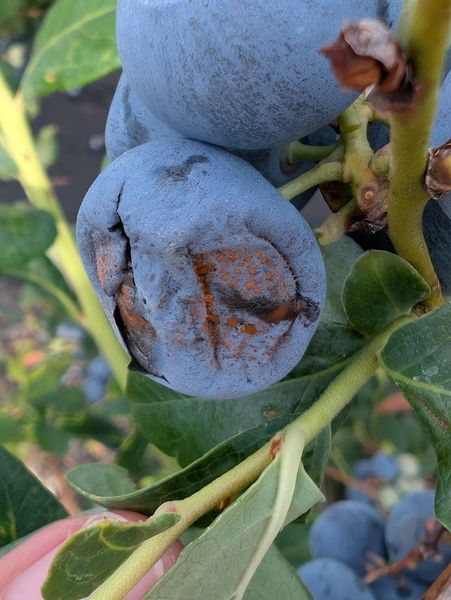
Figure 2. Characteristic orange/salmon conidia from a Colletotrichum spp. infection on ripe fruit.

Figure 3. Blueberry covered entirely by Colletotrichum spp. conidia.

Figure 4. Anthracnose infection that has developed after harvest and quickly spread to surrounding fruit.

Figure 5. Example of the variety of Colletotrichum sp. morphology on Potato Dextrose Agar
Disease Cycle
The fungus overwinters from previous season infections as vegetative growth (mycelium) on bud scales, twigs, and fruit pedicels. In early spring, spore masses develop on these tissues and the disease cycle begins when these spores are dispersed by irrigation or rain splash onto blossoms and young, green fruit. This initial infection can take place at any stage of fruit development. Conidia require at least 8 hours of wetness at 77 ℉ (25 °C) to initiate infection and extended periods of wetness (24 hours) can lead to severe infections. Under these conditions the conidia develop specialized structures (appressoria) to penetrate the fruit surface. Infections on unripe fruit stay latent, slowly feeding on the fruit with no symptoms. Once the fruit matures, the fungus begins producing enzymes that break down the fruit tissue leading to the first symptoms of softening and shriveling. Secondary infections take place throughout harvest when conidia spread to healthy fruit by contact and water dispersal. Infection on buds and twigs stay dormant until the following season, when the cycle starts over.
Management
Anthracnose and other post-harvest fruit rots are best controlled by using several integrated strategies, as proper management cannot be achieved by just one method. For example, fungicide use will not make up for poor handling or a lack of postharvest cooling. Successful growers are those who use all the tools available to them to produce and maintain a quality berry.
Cultivar Selection
Selecting less susceptible cultivars before planting is key for lowering incidence. Most homeowner and pick-your-own plantings can be grown without major anthracnose fruit rot issues, but commercial growers should consult their county agent or horticultural specialist for advice. Large and wet fruit pedicels/stem scars are a major point of infection for fruit rot pathogens, so cultivars with dry stem scars should be emphasized. Cultivars that drop their bud scales earlier in the spring are also less susceptible.
Cultural Practices
Proper pruning practices and wide plant spacing can help prevent crowding, improve airflow, and reduce drying times in the bush. This is especially important as extended wetness is vital for anthracnose fruit rot infection. Selectively pruning off dead buds, pedicels, and twigs will help lower infection rates, but doing so is not economical in every situation. Use drip irrigation to prevent moisture on the bush, and if using overhead irrigation, time it for early morning to allow for the plant to dry off before nightfall. The goal of these practices is to remove overwintering sources and keep plant wetness below the critical eight-hour point.
Fungicides
Preventative fungicides can be used to minimize the sources of infection in the field. Sprays beginning at full bloom and repeating every 7-14 days through harvest are most effective for anthracnose and other fruit rots. Recommended fungicides can be seen in the NC Agricultural Chemicals Manual. While fungicides are an effective tool against fruit rots, they are not a silver bullet. It is important to use them only when needed, rotate active ingredients, and incorporate other management practices to prevent pathogen resistance and promote long-term control.
Fruit Handling/Sanitation
Harvesting all ripe berries from the bush at least every 7 days will drastically reduce anthracnose and other fruit rots, as infected overripe berries are a major source of spread. Sanitation is also key to preventing the spread of spores. Equipment or containers must be kept clean and allowed to dry before coming into contact with berries. When machine harvesting, avoid overfilling lugs in order to prevent damaging the fruit. Generally, the less handling of berries, the better. Do not harvest or handle fruit when it is wet.
Postharvest Cooling
Cooling the fruit to around 35°F (2°C) within two hours of harvest gives the most consistent control of post-harvest fruit rots. Kept at the proper temperature, quality blueberries packaged ready for sale can be kept for up to 2 weeks. In comparison, berries that are kept at 70°F (21°C) can only be expected to hold up for 2 days. Store berries in a shaded area if they can't be brought to a cooler right away. Forced air cooling is the most satisfactory method for palletized blueberry fruit. See publication AG-989 for more information on forced air cooling.
Publication date: March 6, 2025
N.C. Cooperative Extension prohibits discrimination and harassment regardless of age, color, disability, family and marital status, gender identity, national origin, political beliefs, race, religion, sex (including pregnancy), sexual orientation and veteran status.