
Description and Biology
Blueberry bud mites (Acalitus vaccinii) are an almost microscopic mite in the plant-parasitic family Eriophyidae. They undergo four life stages and disperse during their mobile adult form, which wander freely over plant surfaces and are referred to as “vagrants.” Once colonized on a new plant they will spend most of their lives inside blueberry flowers and leaf buds. All four life stages are translucent or white, and will live alongside one another in large clusters within scales of blueberry buds. Mites reproduce rapidly, as females can lay up to 200 eggs. Eggs are about 0.055 mm (1/500th inch) long and 0.035 mm (1/1000th inch) thick. Protonymphs (the young immature stage) are about 0.1 mm (1/250th inch) long, 0.035 mm (1/1000th inch) thick, and oblong like a grain of rice. Deutonymphs (the older immature stage) can be around 0.15 mm (3/500th inch) long, 0.04 mm (1/500th inch) thick, and of a similar shape to protonymphs (Figure 1). Adult bud mites are about 0.2 mm (1/125th inch) long, and described as carrot or cigar shaped, with the front end being slightly larger than the rear (Figure 2). Maturation from egg to adult takes approximately 15 days at 66°F, however development may be accelerated by warmer temperatures.
During the fall and winter, all four life stages may be present at low numbers between the scales of dormant flower buds. If populations reach high levels, significant feeding injury can be incurred in the spring. From fall to spring, bud mites feed on developing tissues, resulting in blistered red bud scales, malformed flowers and stunted fruit, small leaves, and a reduced number of berries per cluster. Before fall, adult mites will become active in search for new flower buds to overwinter inside.
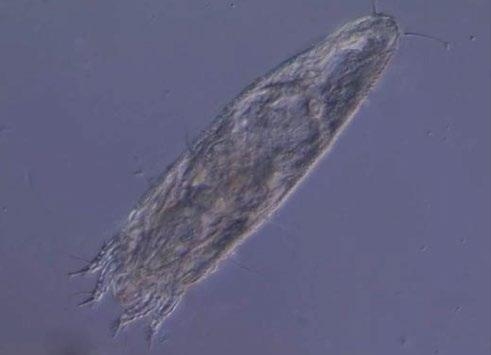
Figure 1: Deutonymph bud mite under a microscope.
Photo by Hartford Keifer

Figure 2: Adult blueberry bud mite under electron scanning microscope.
Photo by Rufus Isaacs, Michigan State University
Scouting and Management
To determine if a field of blueberries is infested with bud mites, it’s necessary to be able to distinguish symptoms from other types of stress. Fields with severe levels of infestation have a high mortality of flower buds (Figure 3), poor fruit set and size (Figure 4), and fruit reddening or blistering once developed (Figure 5). However, these symptoms might look similar to other stress factors like frost damage. Bud mite damage will be in hotspots grouped near the tops of plants as opposed to the uniform damage from frost that may follow weather events.
To confirm bud mite infestation, sampling should be conducted around August and September when adults are mobile, before mites move into new flowering buds to overwinter. Detecting an infestation requires flower buds to be dissected nearest to the shoot tips and viewed under a stereomicroscope. The NCSU Plant Disease and Insect Clinic offers this service for a small fee. Contact your local extension agent for additional resources and information.
Leaf and flower bud damage caused by bud mites can be evident during early spring. Alternatively, fields with clear signs of bud mite damage (not frost damage) can be identified as infested during the spring and later monitored during August and September to estimate the level of infestation and take measures if necessary. Chemical management is necessary only in fields where poor growth or damage has been observed, and where high populations of mites are confirmed. However, preemptive cultural management, such as yearly post-harvest pruning of bushes, is the most effective way to reduce blueberry bud mite populations. During post-harvest pruning, inactive mites living in old bud scales are removed. Cuttings should not be left in row middles, as mites could recolonize nearby bushes. Instead, pruned branches should be taken from the field and destroyed as soon as possible (burned or buried).
If an excessive mite population and damage have been observed (>10% of sampled buds infested), chemical management could help. Mobile adult mites are easier to control, since they are not always protected by the flower bud. Since this stage is typically only active in the late summer and early fall, sprays should be planned to intercept them. To control bud mite colonies beneath the bud scale, sprays should be at a high volume (~100 gal/acre) and high pressure (150 - 200 psi). Horticulture oils (1-2% by volume) are effective at controlling mites and less toxic than synthetic pesticides. Make oil applications as early in the dormant period as possible to allow as long as possible between oil and sulfur applications. Oils will reduce bud hardiness for several days after application, so lime-sulfur, captan, chlorothalonil, and dimethoate spraying within 14 days of oil application could damage plants. Oil effectiveness is reduced at temperatures below 55⁰F, so avoid applying oils 3 to 5 days before expected temperature declines. Additionally, don’t use oils if blueberry leaf and fruit spot (Exobasidium) is abundant, as dormant oils can exacerbate the fungus. If the population persists after horticulture oils, acaricides are available. The active ingredient fenazaquin (Magister®) is labeled for bud mites in blueberries. Other acaricides such as fenpyroximate (Portal®), carbaryl (Sevin®), and bifenthrin (Brigade®), despite not being labeled for bud mites, can result in secondary suppression when targeting labeled overlapping pests.
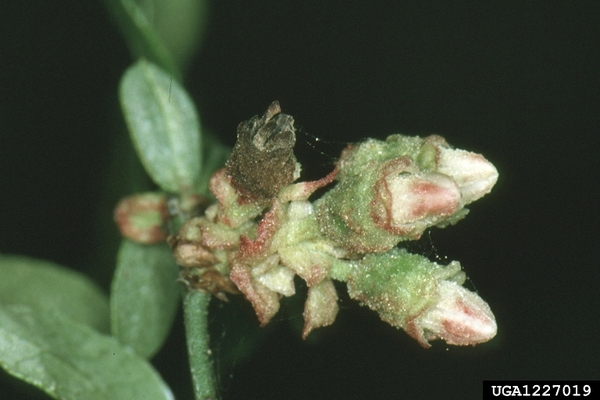
Figure 3: Malformed and a high mortality of flower buds can be a symptom of blueberry bud mite infestation.
Photo by Jerry A. Payne, USDA Agricultural Research Service
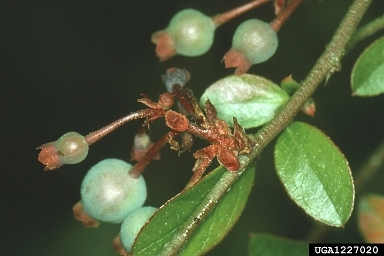
Figure 4: Poor fruit set and size are symptoms of blueberry bud mite infestation.
Photo by Jerry A. Payne, USDA Agricultural Research Service
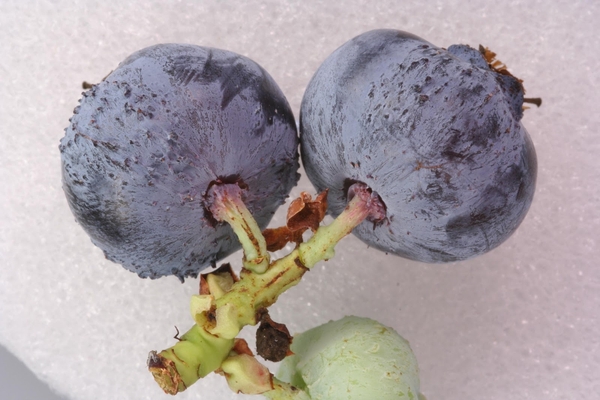
Figure 5: Blistering of fruit developed from flower buds infested with blueberry bud mites.
Photo by Elke Weibelzahl
Biological Control
Several biocontrol agents have been noted to play a role in reducing blueberry bud mite populations. Hirsutella thompsonii is a fungi that feeds on insects, mites, and nematodes, which can help reduce populations of mites. Researchers studying bud mite management suggest that H. thompsonii is a key component in regulating mite populations and should be considered if applying fungicide. Bud mites are also preyed upon by other predatory mites (families Ascidae, Phytoseiidae, and Cheyletidae) and predatory thrips (Aelothripidae). Reducing the use of broad spectrum pesticides could help sustain populations of bud mite natural enemies and mitigate damage. Broad spectrum pesticides include products in IRAC groups 1 and 3, such as carbaryl and bifenthrin.
Additional Resources
Identification and Management of Blueberry Bud Mite
Monitoring and controlling bud mites in highbush blueberry
Publication date: Feb. 3, 2026
N.C. Cooperative Extension prohibits discrimination and harassment regardless of age, color, disability, family and marital status, gender identity, national origin, political beliefs, race, religion, sex (including pregnancy), sexual orientation and veteran status.