
Introduction
Elm trees (Ulmus spp.) are prized landscape and street trees valued for their canopy shape and adaptability to a variety of sites. However, they are vulnerable to several diseases that can affect their health, appearance, and longevity. This fact sheet provides a brief look at some diseases that affect elms, ranging from deadly threats like Dutch elm disease to more manageable issues like powdery mildew.
Dutch Elm Disease
Dutch elm disease (DED) (caused by Ophiostoma ulmi and O. novo-ulmi) is a disease caused by invasive fungal pathogens that are introduced to elm trees through the feeding activity of elm bark beetles (Hylurgopinus rufipes, Scolytus multistriatus, and S. schevyrewi). The pathogens that cause DED can also spread through root grafting, which occurs when the roots of two closely-growing trees fuse together underground, allowing pathogens to be transported from an infected elm to a neighboring elm. All species of elm native to North America and Europe are susceptible to DED.
DED causes leaves to yellow, wilt, and turn brown before the branch dies, a condition known as flagging (Figure 1). These symptoms spread from a single, infected branch to the trunk and the rest of the elm canopy. DED also causes dark brown streaking in the sapwood, which is visible when the bark is removed (Figure 2).
To effectively manage DED, promptly remove infected branches to prevent the pathogen from moving to the main stem. Elm trees with multiple infected branches should be taken down. Fungicide injections can be used to protect elms from infection caused by beetle feeding; however, they provide little protection from infection through root grafts. If an infected elm is near an uninfected elm, dig a trench between the trees to sever root grafts and prevent the spread of the pathogen. Consider planting DED-resistant cultivars for new plantings or replacement trees (e.g., ‘Princeton’, ‘Jefferson’, ‘New Harmony’, and ‘Valley Forge’). More information about DED is available from NC State Extension.
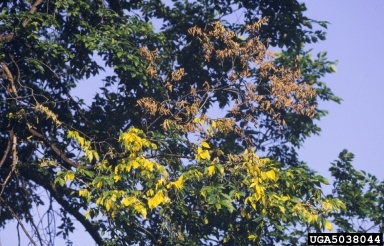
Figure 1. Dutch elm disease causes yellowing and wilting on individual branches.
Joseph OBrien, USDA Forest Service, Bugwood.org
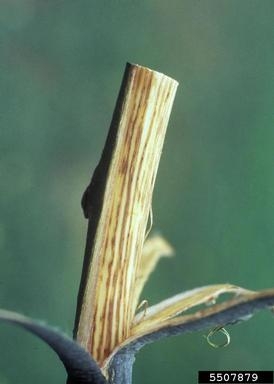
Figure 2. Dutch elm disease fungus causes dark brown streaking in the sapwood.
George Hudler, Cornell University, Bugwood.org
Elm Yellows
Elm yellows, also known as elm phloem necrosis, is an aggressive disease caused by phloem-obligate bacteria called phytoplasmas. The bacteria infect an elm’s root cells and phloem (inner bark), preventing the tree from receiving nourishment. Elm yellows is transmitted by vascular-feeding insects such as leafhoppers (Cicadellidae) and spittlebugs (Cercopoidea). Several native elm species, including American (U. americana), slippery (U. rubra), and winged elm (U. alata), are particularly susceptible to elm yellows.
The disease causes yellowing, premature leaf loss, and foliage and branch dieback (Figure 3). Elm yellows also causes the inner bark of an elm’s lower branches to yellow before they die (Figure 4). Currently, there is no known cure for elm yellows. Remove infested trees and consider growing non-susceptible trees where elm yellows is present. Tetracycline injections have been shown to slow disease progression, though they are not a cure and are only suitable in special cases due to cost. More information about elm yellows is available from the University of Massachusetts Amherst Extension.

Figure 3. Infected trees develop yellowing foliage and shed their leaves prematurely.
Pennsylvania Department of Conservation and Natural Resources - Forestry, Bugwood.org
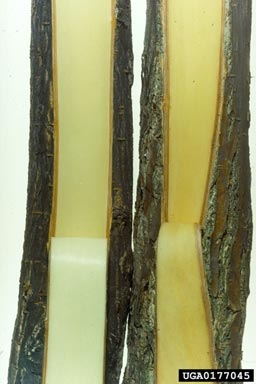
Figure 4. Elm yellows causes an elm’s inner bark to turn tan or dark brown.
Wayne A. Sinclair, Cornell University, Bugwood.org
Elm Black Spot
Elm black spot is caused by the fungal pathogen Stegophora ulmea. Although most elm species are susceptible to elm black spot, American elm is the most susceptible. While elm black spot is a minor disease of mature elm, it can cause significant defoliation and twig dieback in nurseries, especially to susceptible cultivars.
Elm black spot causes small, white and yellow blotches on elm leaves. These blotches later enlarge on the leaf’s surface and develop black specks (the fungal fruiting body) inside them (Figure 5). This pathogen can also infect an elm’s petioles and shoots. Elm black spot symptoms typically begin in the early spring and worsen during cool, moist seasons.
To manage elm black spot, remove infected leaf debris and dead shoots. Chemical control is generally unnecessary for large trees. However, for small nursery trees, apply preventative fungicides such as mancozeb, copper, or chemicals with the active ingredient chlorothalonil at the budbreak in the spring. More information about elm black spot is available from the University of Arkansas Extension.

Figure 5. The fungus causes large yellow patches with tiny black specks to appear on elm leaves.
Bruce Watt, University of Maine, Bugwood.org
Verticillium Wilt
Verticillium wilt is a disease caused by soil-borne fungi in the genus Verticillium (V. dahliae and V. albo-atrum) that infect an elm tree through its root system, typically entering through injuries or openings. If the tree is already weakened due to stress agents like drought or poor soil, the fungus can directly invade the roots. Verticillium fungi grow in an elm’s xylem (water-conducting tissue) and prevent water flow, causing the elm to wilt and die. Verticillium wilt affects many elm species.
One of the first signs of Verticillium wilt is the unexpected wilting and death of a single branch. The disease causes a variety of symptoms that are classified into two phases, acute and chronic. During the acute phase, Verticillium wilt causes abnormal reddening and yellowing, wilting, and dying of individual limbs (Figure 6). The disease also causes brown and green streaking in the sapwood that can be identified by peeling away an elm’s outer bark. Elm trees infected by a chronic strain of Verticillium fungus exhibit slow growth, sparse and stunted leaves, and dieback. In some cases, an elm tree may be affected by both phases of Verticillium wilt simultaneously.
Prevention and sanitation are the most effective strategies for managing Verticillium wilt. If needed, as determined by a soil test, use a balanced fertilizer (10-10-10) and water trees frequently to alleviate wilting and other disease symptoms. Prune and remove dead branches as they occur. Consider planting resistant cultivars. More information about Verticillium wilt is available from New Mexico State University Extension.

Figure 6. Verticillium wilt causes a tree’s leaves to yellow
William Jacobi, Colorado State University, Bugwood.org
Laetiporus Root Rot
Laetiporus root rot is a type of wood decay on hardwoods such as oak, ash, and elm and is caused by shelf fungi in the genus Laetiporus (most notably L. sulphureus). Fungal members of the Laetiporus species complex are often referred to as “chicken of the woods". The fungal infection typically occurs through pruning cuts, bark injuries, or injured roots. Yellow-orange, fan-shaped fruiting bodies (mushrooms) emerge near the injury site or the base of the tree (Figure 7). The fungus weakens the tree’s structural integrity, so infected trees are prone to wind breakage, general canopy decline, and dieback. Once the fruiting bodies have been seen on a tree, it is too late to prevent the establishment of Laetiporus root rot fungus. To reduce additional impacts, consider pruning branches to promote a balanced branching structure and removing dead or diseased limbs. More information about Laetiporus root rot and the L. sulphureus species complex is available from the University of Florida Extension.

Figure 7. Laetiporus fungi generate yellow-orange fruiting bodies near the tree’s base.
Curtis E. Young, The Ohio State University, Bugwood.org
Powdery Mildew
Powdery mildew is a fungal disease caused by Erysiphales fungi, including Erysiphe, Podosphaera, Oïdium, and Leveillula species. Damp, shady conditions, overcrowded growth, and poor air circulation promote powdery mildew. While powdery mildew can weaken foliage and stunt growth, it rarely causes significant harm to overall tree health, especially in mature trees—most damage is cosmetic or aesthetic. In severe cases, the disease stunts elm leaves and causes yellowing, premature leaf fall, and growth decline.
Powdery mildew is most easily identified by its characteristic white-gray powder that resembles talcum powder. The white-gray powder appears in blotches before coating the surface of elm leaves (Figure 8). Although management is usually unnecessary since powdery mildew does not significantly affect the tree’s health, consider pruning young trees to promote better air circulation and removing affected limbs. Preventively, fungicides can be applied at the first sign of infection. More information about powdery mildew is available from the University of Minnesota Extension.

Figure 8. Powdery mildew fungus is easily recognized by its white-gray powder that spreads across a leaf’s surface.
Edward L. Barnard, Florida Department of Agriculture and Consumer Services, Bugwood.org
References
Benitez, B., Paez, C. A., Smith, M. E., and Smith, J. A. 2020. Chicken of the Woods (Laetiporus sulphureus species complex).
Black Spot of Elm – Purdue Landscape Report. 2024.
Brazee, N. J. 2023. Root and Butt Rot caused by Laetiporus cincinnatus & L. sulphureus (Chicken of the Woods).
Flower, C. E., Hayes‑Plazolles, N., Rosa, C., & Slavicek, J. M. (2017). Elm yellows: A widespread and overlooked killer of elm trees across the United States (In Pinchot, C. C., Knight, K. S., Haugen, L. M., Flower, C. E., & Slavicek, J. M., Eds.), Proceedings of the American Elm Restoration Workshop 2016 (pp. 68–72) (General Technical Report NRS‑P‑174). U.S. Department of Agriculture, Forest Service, Northern Research Station.
Frequently Asked Questions about Elm Yellows and the Penn State Elms. 2009.
Gillman, D. 2011. Elm Yellows.
Goldberg, N., and Smith, R. G. n.d. Verticillium Wilt of Catalpa, Maple, and Elm.
Grabowski, M. 2024. Dutch elm disease.
Hudelson, B. 2024. Verticillium Wilt of Trees and Shrubs.
Koetter, R., and Grabowski, M. 2018. Powdery mildew on trees and shrubs.
Moorman, G. W. (2023, November 21). Tree Diseases that Create Hazards. PennState Extension.
Popenoe, J., Warwick, C. R., and Beeson, R. 2018. Key Plant, Key Pests: Chinese Elm (Ulmus parvifolia).
Smith, S., and Pavel, J. n.d. Elm – Black Spot.
Publication date: Aug. 25, 2025
N.C. Cooperative Extension prohibits discrimination and harassment regardless of age, color, disability, family and marital status, gender identity, national origin, political beliefs, race, religion, sex (including pregnancy), sexual orientation and veteran status.