
Introduction
North Carolina can be a challenging place to grow turfgrass lawns. Our climate is hot and humid in summer and cold in winter. As a result, cool-season grasses like tall fescue, which is the most common cool-season turfgrass used on home lawns in North Carolina, often suffer from disease during the summer months. Meanwhile, warm-season grasses typically used in home lawns, such as bermudagrass, zoysiagrass, centipedegrass, and St. Augustinegrass, tend to experience disease problems in fall, winter, and spring. A variety of pathogens can harm turfgrasses, but most turfgrass diseases are caused by fungi. This publication focuses on the most common diseases observed in turfgrass landscapes in North Carolina, describing the conditions that promote disease and providing recommendations for fungicides labeled for use on home lawns. The fungicides are also ranked based on effectiveness to help homeowners decide whether to apply them and, if used, which ones to choose. Several nematicides are also described.
Disease Diagnosis
Before discussing disease management in landscape turf, it's essential to cover some basics. First, accurately identifying the affected grass species is key to effective disease control. Turfgrass pathogens usually infect specific species; therefore, knowing the turfgrass type helps narrow down possible diseases and improves diagnosis accuracy. Unfortunately, determining the cultivar or variety by its appearance is nearly impossible, so keeping detailed records of what was planted is important. In North Carolina, tall fescue, zoysiagrass, bermudagrass, centipedegrass, and St. Augustinegrass are the most common turfgrasses in landscapes. The NC State Extension TurfFiles website is a great resource for more details on these grasses. If there is a mixed stand of turfgrass species, it is critical to identify which species is affected by the disease. Fungi and nematodes are the primary causes of turfgrass diseases in North Carolina, whereas bacteria and viruses account for only a few diseases and are relatively rare.
Once the turfgrass species is correctly identified, the next step is to observe the symptoms of the affected plants. In turfgrass, disease symptoms can be categorized into two types: stand symptoms and plant symptoms. Stand symptoms are patterns in the turf visible from a distance or at standing height, whereas plant symptoms appear on particular parts of the turfgrass plant.
The most common stand symptoms are evident as spots that are less than 4 inches in diameter (Figure 1); patches that are roughly circular-shaped areas greater than 4 inches in diameter (Figure 2); rings that are surrounded by healthy turf inside and outside of the rings (Figure 3); or irregular areas that have no distinct shape (Figure 4).
The most common plant symptoms are evident as leaf spots—round or oval areas on leaves with a distinct border (Figure 5); foliar lesions—large, irregular areas on leaves with a distinct border (Figure 5); stem lesions—large, irregular areas on leaf sheaths with a distinct border (Figure 6); foliar blight or dieback—necrosis of leaves or entire tillers (Figure 7); and crown rot (necrosis of the crown, rhizomes, or stolons) or root rot (necrosis of the roots) (Figure 8).
After observing these symptoms, the next step is to monitor environmental conditions. Current and historical weather data are vital for assessing whether environmental conditions have supported disease development. Remember that weather conditions can vary greatly across different regions of the state. Typically, rainfall and air temperature data are readily available, but soil temperature—which is essential for managing application timing for crown and root diseases—is harder to obtain. The North Carolina State Climate Office maintains weather stations that record soil temperatures throughout the state. In addition, Syngenta GreenCast Online offers soil temperature data based on zip code and can be useful if a weather station isn’t nearby.
Accurately diagnosing diseases involves linking grass species to specific symptoms and suitable environmental conditions. However, some diseases are difficult to identify in the field and require microscopy for precise diagnosis. The North Carolina State University Turf Diagnostic Lab offers turfgrass disease diagnostic services. (NC State's Plant Disease and Insect Clinic provides analyses specific to plants other than turfgrasses.) For each disease described in this publication, pay close attention to the symptoms observed on the affected turfgrass plants and in the turf stand and the favorable conditions for disease development.

Figure 1. The spots in this stand of creeping bentgrass are caused by dollar spot disease.
Credit: NC State Extension Turf Pathology.

Figure 2. The patches in this stand of bermudagrass are caused by spring dead spot.
Credit: NC State Extension Turf Pathology.

Figure 3. The rings on this creeping bentgrass putting green are caused by fairy ring disease.
Credit: NC State Extension Turf Pathology.
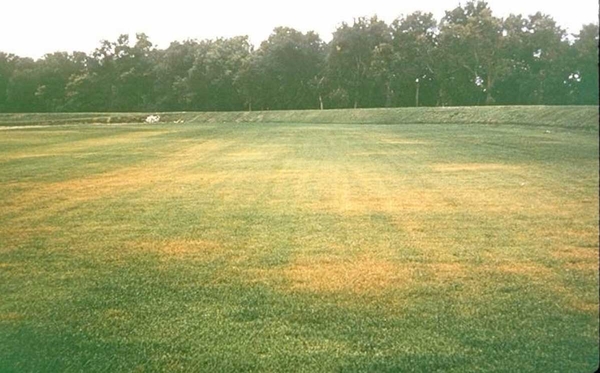
Figure 4. Irregular stand symptoms are typical of rust disease, shown in this image.
Credit: NC State Extension Turf Pathology.
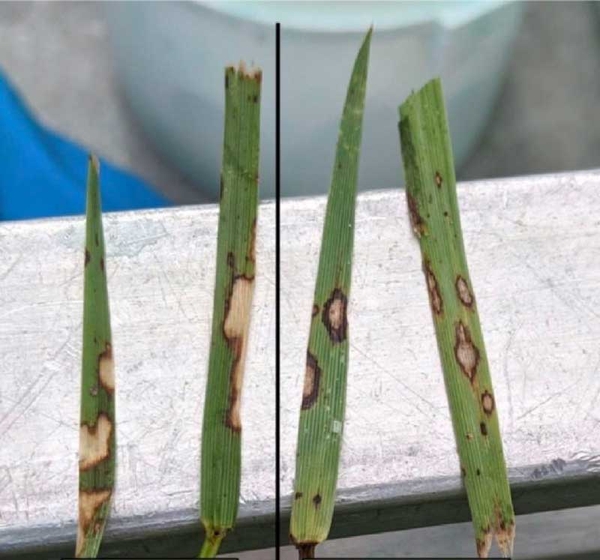
Figure 5. Foliar lesions and leaf spots on blades of tall fescue. The lesions shown on the two blades at left are caused by brown patch disease; the spots on the two blades at right are caused by gray leaf spot disease.
Credit: NC State Extension Turf Pathology.
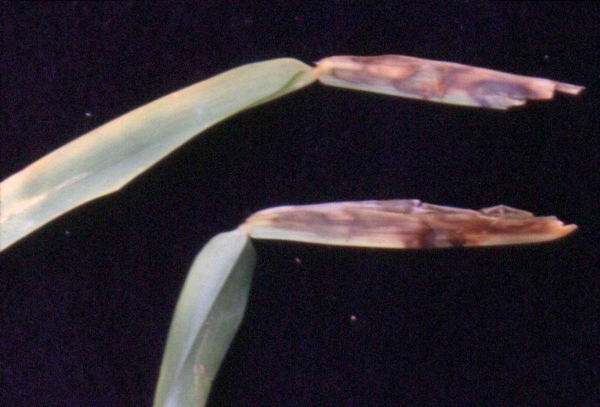
Figure 6. Stem lesions on turfgrass leaf sheaths. This plant symptom is typical of large patch disease on St. Augustinegrass.
Credit: NC State Extension Turf Pathology.

Figure 7. Foliar blight on turfgrass plant. This plant symptom typifies Pythium blight on tall fescue.
Credit: NC State Extension Turf Pathology.

Figure 8. Crown rot and root rot are typical plant symptoms of spring dead spot.
Credit: NC State Extension Turf Pathology.
Principles of Fungicides
Some turfgrass diseases can be managed by using cultivars resistant to specific pathogens. However, fungicides are often necessary for effective control of turfgrass diseases in North Carolina. To achieve optimal results with fungicides, it is important to understand how they affect fungi. The term “fungicide” refers to a substance that kills fungi; however, fungicides do not fully eliminate all fungal cells. Because fungi are microscopic, there are far too many cells for a fungicide to destroy completely. Most fungal cells are killed, but once the fungicide wears off in the environment, the targeted fungus can become reestablished if conditions are favorable. Fungicides usually remain effective for two to three weeks. Therefore, the length of residual control depends on the pathogen's growth rate. If the pathogen is aggressive and can reestablish quickly after application, the fungicide may suppress the disease for only about two weeks. On the other hand, if the pathogen grows more slowly, the fungicide could suppress the disease for three to four weeks. In addition, the fungus must be actively growing for a fungicide to work; thus, knowing when conditions favor disease development is essential. Well-timed fungicide applications can provide excellent disease control while minimizing risks to humans and the environment.
The timing of fungicide applications depends on the pathogens linked to the specific diseases described in this publication. Each disease profile suggests the best timing for application. Most fungicides are applied as liquid solutions because there are few effective granular options available on the market. It is wise to consider hiring a professional for pesticide applications, as application procedures are precise and require specialized equipment. Every fungicide approved for use in turfgrass has been authorized by the U.S. Environmental Protection Agency (EPA). Each fungicide comes with instructions for proper use, which are legally binding. Following the label is crucial to minimizing risks to humans and the environment while effectively controlling turfgrass diseases.
Factors Affecting Fungicide Performance
Four main factors influence the effectiveness of a fungicide: deposition factors, depletion factors, disease pressure, and fungicide resistance.
Deposition factors are those that the fungicide user controls, including application rate, interval, timing, and volume. This publication will help guide the proper selection of these factors for the most significant diseases in North Carolina turfgrass landscapes. Generally, the best way to improve fungicide performance is to apply it preventively or before symptoms appear. Curative applications might work but require higher application rates and shorter intervals, which are more costly, are potentially harmful to the environment, and may accelerate the development of fungicide resistance.
Depletion factors refer to the processes by which a pesticide, including a fungicide, breaks down in the environment. Degradation occurs through several pathways, including photodegradation (degradation under sunlight), biodegradation (degradation by soil microbes), metabolic transformation (changes within the turfgrass plant), and physical removal of the deposit by mowing. Current research indicates that fungicides generally last about 10 to 14 days on the leaf at temperatures of 80°F or higher. In soil, fungicides may persist for about 21 days, but it is unclear whether these residues remain active. The residual control of a fungicide depends on the activity of its active ingredient against the fungal pathogen and on how quickly the pathogen can recover after exposure. For example, fungicides that are highly effective against the brown patch pathogen typically provide 28 days of suppression. By comparison, fungicides that are highly effective for gray leaf spot usually provide about 14 to 21 days of suppression, depending on environmental conditions. Research conducted at NC State has shown that fungicides are detected on turfgrass leaves up to three days after application. Therefore, do not mow for three days after application, and do not remove clippings during this period.
Disease pressure depends on the environment, and fungi and nematodes react positively to temperature and moisture. Therefore, a hot, wet summer or fall could lead to more severe diseases and might require additional measures for effective management. Monitor recent weather conditions and stay informed via the NC State Extension TurfFiles website, as many posts discuss how weather can affect pesticide effectiveness.
Fungicide resistance develops when an individual organism within a pathogen population is favored by repeated use of the same fungicide active ingredient. Fortunately, resistance to fungicides among North Carolina turfgrass diseases is not widespread; dollar spot and gray leaf spot are the main turfgrass diseases in North Carolina prone to fungicide resistance. Pythium blight is less common in North Carolina landscapes, but if it becomes more widespread, it could also develop resistance.
Although pesticide labels are critical and mandated by law, they do not guarantee a product's effectiveness. This publication aims to help homeowners better manage turfgrass diseases and offers the latest efficacy ratings for the main diseases. Please use the information as a guide to choosing the products that will work best.
Turfgrass Disease Profiles
Diseases Caused by Fungal Pathogens
Brown Patch
Hosts include tall fescue, fine fescues, creeping bentgrass, and Kentucky bluegrass.
Brown patch is a fungal disease that affects cool-season turfgrasses and is especially harmful to tall fescue grown in North Carolina. For more details on symptoms and development factors, see Brown Patch in Turf. Factors influencing brown patch growth include nighttime temperatures above 60°F; the disease is most severe when temperatures exceed 70°F. In North Carolina, brown patch typically appears on tall fescue from mid- to late May, but symptoms often don't develop until early to mid-June. When using fungicides to control brown patch, applications starting in mid-May are generally very effective. In research trials at NC State, 28 days of suppression is common with fungicides containing an active ingredient with a Fungicide Resistance Action Committee (FRAC) 11 (Table 1). Typically, two to three applications during the summer are enough to manage brown patch with fungicides. When resistant tall fescue cultivars are planted, suppression with fungicides will likely improve. Fertilizer can be applied in summer, as long as the nitrogen rate does not exceed 0.5 pounds per 1,000 square feet. Soil surfactants can also lessen the severity of brown patch when used consistently throughout the summer.
Table 1. Fungicides Labeled for Home Lawn Use for Management of Brown Patch in Turfgrass
|
Fungicide and Formulation1 |
Amount of Formulation2 |
Application Interval (Days)3 |
Efficacy Rating |
Resistance Risk |
FRAC Code4 |
|---|---|---|---|---|---|
|
azoxystrobin (Heritage) |
|
|
++++ |
Low |
11 |
|
azoxystrobin + propiconazole (Headway) |
|
|
++++ |
Low |
11 + 3 |
|
azoxystrobin + propiconazole (Compendium) |
0.65–1.3 fl oz |
14 |
++++ |
Low |
11 + 3 |
|
cyazofamid + azoxystrobin (Union) |
2.9–5.75 fl oz |
14–28 |
++++ |
Low |
21 + 11 |
|
fludioxonil (Medallion) |
0.75–2 fl oz |
7–14 |
+++ |
Low |
12 |
|
fluindapyr + flutriafol (Kalida) |
0.25–0.4 fl oz |
14–28 |
++++ |
Low |
7 + 3 |
|
fluopyram + trifloxystrobin (Exteris Stressgard) |
2.1–6 fl oz |
14–28 |
+++ |
Low |
7 + 11 |
|
fluoxastrobin (Fame) |
0.1–0.4 fl oz |
14–28 |
++++ |
Low |
11 |
|
fluxapyroxad (Xzemplar) |
0.21–0.26 fl oz |
14–21 |
+++ |
Low |
7 |
|
flutolanil |
|
|
|
|
7 |
|
flutolanil + thiophanate-methyl (SysStar) |
2–3 oz |
14–21 |
++++ |
Low |
7 + 1 |
|
mandestrobin (Pinpoint) |
0.31 fl oz |
14 |
+ |
Low |
11 |
|
metconazole (Tourney) |
0.28–0.37 oz |
14–21 |
++ |
Low |
3 |
|
myclobutanil (Eagle) |
1.2 oz |
14 |
+ |
Low |
3 |
|
penthiopyrad (Velista) |
0.3–0.5 oz |
14–21 |
++ |
Low |
7 |
|
polyoxin D |
|
|
+++ |
Low |
19 |
|
propiconazole (Banner MAXX II) |
1–2 fl oz |
14–21 |
++ |
Low |
3 |
|
Pseudomonas chlororaphis strain AFS009 (Zio) |
1.8–6 oz |
7–21 |
++ |
Not Known |
BM02 |
|
pyraclostrobin (Insignia) |
|
|
++++ |
Low |
11 |
|
pyraclostrobin + fluxapyroxad (Lexicon Intrinsic) |
0.34–0.47 fl oz |
14–28 |
++++ |
Low |
11 + 7 |
|
pyraclostrobin + triticonazole (Pillar G) |
3 lb |
14–28 |
+++ |
Low |
11 + 3 |
|
triadimefon (Bayleton) |
0.5 to 1 oz |
15–30 |
++ |
Low |
3 |
|
trifloxystrobin (Compass) |
0.1–0.2 oz |
14 |
+++ |
Low |
11 |
|
trifloxystrobin + triadimefon |
|
|
+++ |
Low |
11 + 3 |
|
triticonazole |
|
|
++ |
Low |
3 |
1 Other trade names with the same active ingredients are labeled for use on turfgrasses and can be used according to label directions. ↲
2 Units are ounces (oz), fluid ounces (fl oz), or pounds (lb), depending on formulation. Apply fungicides in 2 to 5 gallons of water per 1,000 square feet, according to label directions. Use lower rates for preventive control and higher rates for curative applications. ↲
3 Use shorter intervals when conditions are very favorable for disease. ↲
4 Fungicide Resistance Action Committee code. Products with same code have the same mode of action and are in the same chemical class. ↲
Efficacy Rating
++++ = Excellent control when conditions are highly favorable for disease development.
+++ = Good control when disease pressure is high; excellent control when disease pressure is moderate,
++ = Good control when disease pressure is moderate; excellent control when disease pressure is low.
+ = Good control when disease pressure is low.
Resistance Risk
Low = Rotate to a different chemical class after three to four applications; tank-mixing is not necessary.
Not Known = Not rated due to insufficient data.
Gray Leaf Spot
Hosts include tall fescue, perennial ryegrass, zoysiagrasses, and St. Augustinegrass.
Gray leaf spot is a particularly damaging disease of tall fescue in North Carolina when nighttime temperatures stay above 72°F and humidity or rain continues. Usually, this disease is most severe from late July through September during tropical system activity. It can be very destructive to young seedlings, so protective measures during fall renovations are crucial. The pathogen produces airborne spores that can quickly infect large areas of turf. Gray leaf spot is often mistaken for Pythium blight, a less common disease in North Carolina, because of the damage it causes. Resistance to gray leaf spot in tall fescue cultivars is currently limited, but newer resistant varieties are expected soon. The disease can also affect St. Augustinegrass, but it rarely causes major damage in North Carolina. Unfortunately, the most effective fungicides for brown patch (FRAC 11 active ingredients) do not work well against gray leaf spot; therefore, we strongly recommend using FRAC 11 ingredients in combination with FRAC 3 or FRAC 1 (Table 2). The gray leaf spot pathogen is very aggressive, and when conditions favor disease development, it may be necessary to reapply every 14 to 21 days to keep it under control until nighttime temperatures regularly fall below 70°F. Be sure to mow tall fescue regularly, as the disease gets worse when the canopy is tall and begins to fold over. Limiting irrigation during times when leaf wetness is likely, such as in the evenings, is also advised. For more information, see Gray Leaf Spot in Turf.
Table 2. Fungicides Labeled for Home Lawn Use for Management of Gray Leaf Spot in Turfgrass
|
Fungicide and Formulation1 |
Amount of Formulation2 |
Application Interval (Days)3 |
Efficacy Rating |
Resistance Risk |
FRAC Code4 |
|---|---|---|---|---|---|
|
azoxystrobin (Heritage) |
|
|
++ |
High |
11 |
|
azoxystrobin + propiconazole (Headway) |
|
|
++++ |
High |
11 + 3 |
|
azoxystrobin + propiconazole (Compendium) |
1.3–2.6 fl oz |
14–28 |
++++ |
High |
11 + 3 |
|
cyazofamid + azoxystrobin (Union) |
2.9–5.75 fl oz |
14–28 |
++ |
High |
21 + 11 |
|
fluopyram + trifloxystrobin (Exteris Stressgard) |
2.1–6 fl oz |
14–28 |
? |
High |
7 +11 |
|
fluoxastrobin (Fame) |
0.2–0.4 fl oz |
14–28 |
++ |
High |
11 |
|
flutolanil + thiophanate-methyl (SysStar) |
2–3 oz |
14 |
+++ |
High |
7 + 1 |
|
metconazole (Tourney) |
0.37 oz |
14 |
++ |
Medium |
3 |
|
myclobutanil (Eagle) |
1.2–2.4 fl oz |
14 |
++ |
Medium |
3 |
|
propiconazole (Banner MAXX II) |
1–2 fl oz |
14 |
++ |
Medium |
3 |
|
pyraclostrobin (Insignia) |
|
|
++ |
High |
11 |
|
pyraclostrobin + fluxapyroxad (Lexicon Intrinsic) |
0.34–0.47 fl oz |
14–28 |
+++ |
High |
11 + 7 |
|
thiophanate-methyl |
|
|
++++ |
High |
1 |
|
triadimefon (Bayleton) |
0.5–1 oz |
14 |
++ |
Medium |
3 |
|
trifloxystrobin (Compass) |
0.15–0.2 oz |
14 |
++ |
High |
11 |
|
trifloxystrobin + triadimefon |
|
|
+++ |
High |
11 + 3 |
1 Other trade names with the same active ingredients are labeled for use on turfgrasses and can be used according to label directions. ↲
2 Units are ounces (oz), fluid ounces (fl oz), or pounds (lb), depending on formulation. Apply fungicides in 2 to 5 gallons of water per 1,000 square feet, according to label directions. Use lower rates for preventive control and higher rates for curative applications. ↲
3 Use shorter intervals when conditions are very favorable for disease. ↲
4 Fungicide Resistance Action Committee code. Products with same code have the same mode of action and are in the same chemical class. ↲
Efficacy Rating
++++ = Excellent control when conditions are highly favorable for disease development.
+++ = Good control when disease pressure is high; excellent control when disease pressure is moderate.
++ = Good control when disease pressure is moderate; excellent control when disease pressure is low.
+ = Good control when disease pressure is low.
? = not rated due to insufficient data
Resistance Risk
Medium = Rotate to a different chemical class after one to two applications; tank-mixing with low- or medium-risk products is recommended.
High = Rotate to different chemical class after EVERY application; tank-mix with low- or medium-risk product for EVERY application.
Pythium Blight
Hosts primarily include tall fescue and perennial ryegrass, but all turfgrasses can be hosts under conducive conditions.
Pythium blight is a relatively uncommon disease that affects tall fescue in North Carolina. The pathogens responsible for Pythium blight need considerable soil moisture to cause infection, and fixing drainage problems or preventing water from pooling usually eliminates this disease. Pythium blight is often seen in areas of the landscape near downspouts, where water collects, or where air circulation is limited. Addressing these conditions can effectively control the disease. Fungicides should be applied only when necessary (Table 3). Therefore, accurate diagnosis is essential to confirm that Pythium blight is the actual issue. Your local Extension center can help with sample submission to the Turf Diagnostic Lab. Pythium has not been documented on warm-season turf lawns. For more information, see Pythium Blight in Turf.
Table 3. Fungicides Labeled for Home Lawn Use for Management of Pythium Blight in Turfgrass
|
Fungicide and Formulation1 |
Amount of Formulation2 |
Application Interval (Days)3 |
Efficacy Rating |
Resistance Risk |
FRAC Code4 |
|---|---|---|---|---|---|
|
azoxystrobin (Heritage) |
|
|
++ |
High |
11 |
|
azoxystrobin + propiconazole (Headway) |
|
|
++ |
High |
11+ 3 |
|
azoxystrobin + propiconazole (Compendium) |
2.6 fl oz |
14 |
++ |
High |
11 + 3 |
|
cyazofamid (Segway) |
0.45–0.9 fl oz |
14–21 |
++++ |
High |
21 |
|
cyazofamid + azoxystrobin (Union) |
2.9–5.75 fl oz |
14 to 28 |
++++ |
High |
21 + 11 |
|
fluopicolide + propamocarb (Stellar) |
1.2 fl oz |
14 |
++++ |
Medium |
43 + 28 |
|
fluoxastrobin (Fame) |
0.18–0.36 fl oz |
7–14 |
++ |
High |
11 |
|
mefenoxam |
|
|
++++ |
High |
4 |
|
picarbutrazox (Serata) |
0.6–0.8 fl oz |
14–21 |
+++ |
High |
U17 |
|
Pseudomonas chlororaphis strain AFS009 (Zio) |
1.8–6 oz |
7–21 |
+ |
Not Known |
BM02 |
|
pyraclostrobin (Insignia) |
|
|
++ |
High |
11 |
|
pyraclostrobin + fluxapyroxad (Lexicon Intrinsic) |
0.47 fl oz |
14 |
++ |
High |
11 + 7 |
1 Other trade names with the same active ingredients are labeled for use on turfgrasses and can be used according to label directions. ↲
2 Units are ounces (oz), fluid ounces (fl oz), or pounds (lb), depending on formulation. Apply fungicides in 2 to 5 gallons of water per 1,000 square feet, according to label directions. Use lower rates for prevention and higher rates for curative applications. ↲
3 Use shorter intervals when conditions are very favorable for disease. ↲
4 Fungicide Resistance Action Committee code. Products with same code have the same mode of action and are in the same chemical class. ↲
Efficacy Rating
++++ = Excellent control when conditions are highly favorable for disease development.
+++ = Good control when disease pressure is high; excellent control when disease pressure is moderate.
++ = Good control when disease pressure is moderate; excellent control when disease pressure is low.
+ = Good control when disease pressure is low.
Resistance Risk
Medium = Rotate to a different chemical class after 1 to 2 applications; tank-mixing with low- or medium-risk products is recommended.
High = Rotate to different chemical class after EVERY application; tank-mix with low- or medium-risk product for EVERY application.
Not Known = Not rated due to insufficient data.
Dollar Spot
All turfgrasses are hosts, yet dollar spot is most severe in Kentucky bluegrass, zoysiagrass, and bermudagrass in North Carolina.
Dollar spot is relatively uncommon on tall fescue and causes minimal damage. If dollar spot appears on tall fescue, it probably indicates the need for additional fertility. Fungicides are seldom necessary to control dollar spot in tall fescue. However, the severity of dollar spot is increasing on warm-season grasses like zoysiagrass and bermudagrass. The disease is most severe when relative humidity remains above 70% for five consecutive days, with temperatures between 55°F and 95°F. Relative humidity primarily influences dollar spot development, and a predictive model (the Smith-Kerns Model) can help schedule fungicide applications. Although this model hasn't been validated for warm-season grasses, it offers basic guidance on conditions that may promote the disease. Dollar spot is one of the most critical diseases in the turfgrass industry, and many fungicides are effective for its control (Table 4). However, because fungi that cause dollar spot can develop resistance, it's important to rotate or mix fungicides across FRAC groups to prevent resistance. Applying extra nitrogen fertilizer can help warm-season grasses recover faster, but fertility alone may not suffice without the use of a fungicide. For more information, see Dollar Spot in Turf.
Table 4. Fungicides Labeled for Home Lawn Use for Management of Dollar Spot in Turfgrass
|
Fungicide and Formulation1 |
Amount of Formulation2 |
Application Interval (Days)3 |
Efficacy Rating |
Resistance Risk |
FRAC Code4 |
|---|---|---|---|---|---|
|
azoxystrobin + propiconazole (Headway) |
|
|
+++ |
Medium |
11 + 3 |
|
azoxystrobin + propiconazole (Compendium) |
0.65–1.3 fl oz |
14 |
+++ |
Medium |
11 + 3 |
|
fluindapyr + flutriafol (Kalida) |
0.25–0.4 fl oz |
7–14 |
++++ |
Medium |
7 + 3 |
|
fluopyram + trifloxystrobin (Exteris Stressgard) |
1.5–6 fl oz |
7–28 |
++++ |
Medium |
7 + 11 |
|
fluoxastrobin (Fame) |
0.2–0.4 fl oz |
14–21 |
++ |
High |
11 |
|
fluxapyroxad (Xzemplar) |
0.16–0.26 fl oz |
14–28 |
++++ |
High |
7 |
|
isofetamid (Kabuto) |
0.4–0.5 fl oz |
14 |
+++ |
Medium |
7 |
|
mandestrobin (Pinpoint) |
0.275–0.31 fl oz |
14–21 |
+++ |
Medium |
11 |
|
metconazole (Tourney) |
0.18–0.37 oz |
14–21 |
+++ |
Medium |
3 |
|
myclobutanil (Eagle) |
0.5–2.4 fl oz |
7–28 |
++ |
Medium |
3 |
|
penthiopyrad (Velista) |
0.3–0.5 oz |
14–21 |
+++ |
High |
7 |
|
propiconazole (Banner MAXX II) |
0.5–2 fl oz |
7–28 |
+++ |
Medium |
3 |
|
Pseudomonas chlororaphis strain AFS009 (Zio) |
1.8–6 oz |
7–21 |
+ |
Not Known |
BM02 |
|
pyraclostrobin (Insignia) |
|
|
++ |
High |
11 |
|
pyraclostrobin + fluxapyroxad (Lexicon Intrinsic) |
0.34–0.47 fl oz |
14–28 |
++++ |
High |
11 + 7 |
|
pyraclostrobin + triticonazole (Pillar G) |
3 lb |
14–28 |
++ |
Medium |
11 + 3 |
|
thiophanate-methyl |
|
|
++ |
High |
1 |
|
triadimefon (Bayleton) |
0.25–1 oz |
14–30 |
+++ |
Medium |
3 |
|
triticonazole |
|
|
+++ |
Medium |
3 |
1 Other trade names with the same active ingredients are labeled for use on turfgrasses and can be used according to label directions. ↲
2 Units are ounces (oz), fluid ounces (fl oz), or pounds (lb), depending on formulation. Apply fungicides in 2 to 5 gallons of water per 1,000 square feet, according to label directions. Use lower rates for preventive control and higher rates for curative applications. ↲
3 Use shorter intervals when conditions are very favorable for disease. ↲
4 Fungicide Resistance Action Committee code. Products with same code have the same mode of action and are in the same chemical class. ↲
Efficacy Rating
++++ = Excellent control when conditions are highly favorable for disease development.
+++ = Good control when disease pressure is high; excellent control when disease pressure is moderate.
++ = Good control when disease pressure is moderate; excellent control when disease pressure is low.
+ = Good control when disease pressure is low.
Resistance Risk
Medium = Rotate to a different chemical class after one to two applications; tank-mixing with low- or medium-risk products is recommended.
High = Rotate to different chemical class after EVERY application; tank-mix with low- or medium-risk product for EVERY application.
Not Known = not rated due to insufficient data
Large Patch
Hosts include centipedegrass, St. Augustinegrass, zoysiagrasses, and bermudagrass.
Large patch is a significant disease that affects centipedegrass, St. Augustinegrass, zoysiagrass, and bermudagrass. It is least damaging to bermudagrass but can make the turf look unsightly after spring green-up. The other turfgrass species can be severely impacted by large patch, and recovery may take months after spring green-up if not managed properly. Large patch is easily controlled with two fungicide applications (Table 5). The first should be applied when soil temperatures are between 75°F and 80°F in late summer or early fall. The second application should occur within 28 days of the first. The key to effective fungicide treatment is sufficient water volume, as the fungus attacks the plant’s leaf sheath and crown. Applying 2 gallons per 1,000 square feet is essential for excellent suppression of large patch. If that water volume isn’t possible and an irrigation system is available, applying 1/8 inch of water is also effective. Granular fungicides can work well also, but irrigation or rainfall is needed for them to be effective. Spring applications have not been shown to be effective in NC State research and may not be necessary. However, if a spring application is needed, apply it when soil temperatures are 55°F to 60°F. For more information, see Large Patch in Turf.
Table 5. Fungicides Labeled for Home Lawn Use for Management of Large Patch in Turfgrass
|
Fungicide and Formulation1 |
Amount of Formulation2 |
Application Interval (Days)3 |
Efficacy Rating |
Resistance Risk |
FRAC Code4 |
|---|---|---|---|---|---|
|
azoxystrobin (Heritage) |
|
|
+++ |
Low |
11 |
|
azoxystrobin + propiconazole (Headway) |
1.5–3 fl oz |
14–28 |
++++ |
Low |
11 + 3 |
|
azoxystrobin + propiconazole (Compendium) |
1.3–2.6 fl oz |
14–28 |
++++ |
Low |
11 + 3 |
|
cyazofamid + azoxystrobin (Union) |
5.75 fl oz |
14–28 |
+++ |
Low |
21 + 11 |
|
fluindapyr + flutriafol (Kalida) |
0.25–0.4 fl oz |
21–28 |
+++ |
Low |
7 + 3 |
|
fluoxastrobin (Fame) |
|
|
+++ |
Low |
11 |
|
fluxapyroxad (Xzemplar) |
0.21–0.26 fl oz |
14–28 |
+++ |
Low |
7 |
|
flutolanil |
|
|
|
|
7 |
|
metconazole (Tourney) |
0.37 oz |
14 |
++++ |
Low |
3 |
|
myclobutanil (Eagle) |
2.4 fl oz |
28 (fall) |
++ |
Low |
3 |
|
penthiopyrad (Velista) |
0.7 fl oz |
14–28 |
+++ |
Low |
7 |
|
propiconazole (Banner MAXX II) |
3–4 fl oz |
14–21 early fall |
+++ |
Low |
3 |
|
pyraclostrobin (Insignia) |
|
|
+++ |
Low |
11 |
|
pyraclostrobin + fluxapyroxad (Lexicon Intrinsic) |
0.34–0.47 fl oz |
14–28 |
++++ |
Low |
11 + 7 |
|
pyraclostrobin + triticonazole (Pillar G) |
3 lb |
14–28 |
+++ |
Low |
11 + 3 |
|
triadimefon (Bayleton) |
1–1.9 fl oz |
14–21 fall and spring |
+++ |
Low |
3 |
|
triticonazole |
|
|
++++ |
Low |
3 |
1 Other trade names with the same active ingredients are labeled for use on turfgrasses and can be used according to label directions. ↲
2 Units are ounces (oz), fluid ounces (fl oz), or pounds (lb), depending on formulation. Apply fungicides in 2 to 5 gallons of water per 1,000 square feet, according to label directions. Use lower rates for preventive control and higher rates for curative applications. ↲
3 Use shorter intervals when conditions are very favorable for disease. ↲
4 Fungicide Resistance Action Committee code. Products with same code have the same mode of action and are in the same chemical class. ↲
Efficacy Rating
++++ = Excellent control when conditions are highly favorable for disease development.
+++ = Good control when disease pressure is high; excellent control when disease pressure is moderate.
++ = Good control when disease pressure is moderate; excellent control when disease pressure is low.
+ = Good control when disease pressure is low.
Resistance Risk
Low = Rotate to different chemical class after three to four applications; tank-mixing not necessary.
Spring Dead Spot
Hosts include zoysiagrasses and bermudagrass.
Spring dead spot is the most damaging disease of bermudagrass in North Carolina. It can also infect zoysiagrass. The pathogens responsible for this disease start infecting plants when soil temperatures fall to 75°F in the fall and continue to colonize as long as soil temperatures stay above 60°F. For more information, see Spring Dead Spot in Turf. There are limited effective active ingredients for home lawns affected by spring dead spot (Table 6). However, two fall applications—first when soil temperatures reach 75°F and a second 21 to 28 days later—provide excellent control. Because these pathogens attack the roots of warm-season grasses, post-application irrigation at 1/8 inch is necessary for effective control.
Table 6. Fungicides Labeled for Home Lawn Use for Management of Spring Dead Spot in Turfgrass
|
Fungicide and Formulation1 |
Amount of Formulation2 |
Application Interval (Days)3 |
Efficacy Rating |
Resistance Risk |
FRAC Code4 |
|---|---|---|---|---|---|
|
azoxystrobin (Heritage TL) |
2 fl oz |
14–28 |
+ |
Low |
11 |
|
azoxystrobin + propiconazole (Headway) |
|
|
+++ |
Low |
11 + 3 |
|
azoxystrobin + propiconazole (Compendium) |
2.6 fl oz |
14–28 |
+++ |
Low |
11 + 3 |
|
cyclobutrifluram (Trefinti6) |
0.087–0.174 fl oz |
14–28 |
++++ |
Low |
7 + N-35 |
|
fluindapyr + flutriafol (Kalida) |
0.25–0.4 fl oz |
21–28 |
+++ |
Low |
7 + 3 |
|
isofetamid (Kabuto) |
0.5–3.2 fl oz |
refer to label |
++++ |
Low |
7 |
|
myclobutanil (Eagle) |
2.4 fl oz |
28 (fall) |
+ |
Low |
3 |
|
penthiopyrad (Velista) |
0.5–0.7 fl oz |
28 |
+++ |
Low |
7 |
|
propiconazole (Banner MAXX) |
4 fl oz |
30 |
+++ |
Low |
3 |
|
thiophanate-methyl |
|
|
+ |
Low |
1 |
1 Other trade names with the same active ingredients are labeled for use on turfgrasses and can be used according to label directions. ↲
2 Units are ounces (oz), fluid ounces (fl oz), or pounds (lb), depending on formulation. Apply fungicides in 2 to 5 gallons of water per 1,000 square feet, according to label directions. Use lower rates for preventive control and higher rates for curative applications. ↲
3 Use shorter intervals when conditions are very favorable for disease. ↲
4 Fungicide Resistance Action Committee code. Products with same code have the same mode of action and are in the same chemical class. ↲
5 Insecticide Resistance Action Committee (IRAC) code. Products with the same code have the same mode of action and are in the same chemical class. ↲
6 This product contains both a fungicide (FRAC group 7) and a nematicide (IRAC group N-3). ↲
Efficacy Rating
++++ = Excellent control when conditions are highly favorable for disease development.
+++ = Good control when disease pressure is high; excellent control when disease pressure is moderate.
++ = Good control when disease pressure is moderate; excellent control when disease pressure is low.
+ = Good control when disease pressure is low.
Resistance Risk
Low = Rotate to a different chemical class after three to four applications; tank-mixing is not necessary.
Disease Caused by Nematodes
Nematodes
All turfgrass species can be hosts for nematodes.
Nematodes pose problems in all turfgrass species, especially in sandy soils. The sting nematode is the most damaging species in turfgrass landscapes, and its presence at any threshold justifies management efforts. Nematodes are obligate biotrophs, meaning they need a host to complete their life cycle, so they don't kill plants outright. Any measures that help turfgrass plants acquire water and nutrients can help them withstand nematode feeding. Generally, increased irrigation and fertility might be necessary. The best way to determine if nematodes are an issue is to send samples to the North Carolina Department of Agriculture and Consumer Services (NCDA&CS) Nematode Assay Lab. Instructions are available on their website, and your local Extension agent can help with sample collection and submission. NC State Extension specialists can team up with your local agent to identify if a specific nematode species is a problem and recommend the most appropriate management strategy. As with the treatment of other root diseases, if nematicides are used, irrigation is required immediately after application to ensure their effectiveness (Table 7).
Table 7. Nematicides Labeled for Home Lawn Use for Management of Nematodes in Turfgrass
|
Nematicide and Formulation1 |
Amount of Formulation2 |
Application Interval3 |
Nematode Species |
Efficacy Rating |
Resistance Action Committee Code |
|---|---|---|---|---|---|
|
fluensulfone (Nimitz Pro G) |
60–120 lb/A |
28 days |
lance root-knot sting |
? ? ? |
NA8 |
|
fluopyram (Indemnify SC6) |
8.5–17.1 fl oz/A |
14 days |
lance root-knot sting |
+ ++++ ++++ |
74 |
|
cyclobutrifluram (Trefinti SC7) |
3.8–7.6 fl oz/A |
14–28 |
lance root-knot sting |
++++ ++++ ++++ |
74 + N-35 |
1 Other trade names with the same active ingredients are labeled for use on turfgrasses and can be used according to label directions. ↲
2 Units are fluid ounces (fl oz) or pounds (lb), depending on formulation. Apply nematicides according to label directions. Use lower rates for preventive control and higher rates for curative applications. ↲
3 Use shorter intervals when conditions are very favorable for nematode activity. ↲
4 Fungicide Resistance Action Committee (FRAC) code. Products with the same code have the same mode of action and are in the same chemical class.
5 Insecticide Resistance Action Committee (IRAC) code. Products with the same code have the same mode of action and are in the same chemical class. ↲
6 Though used as a nematicide in turfgrass, this product is classified as a fungicide in the FRAC group 7. ↲
7 This product contains both a fungicide (FRAC group 7) and a nematicide (IRAC group N-3). ↲
8 Not applicable. ↲
Efficacy Rating
++++ = Excellent control when conditions are highly favorable for disease development.
+++ = Good control when disease pressure is high; excellent control when disease pressure is moderate.
++ = Good control when disease pressure is moderate; excellent control when disease pressure is low.
+ = Good control when disease pressure is low.
? = Not rated due to insufficient data.
Publication date: June 1, 2026
AG-1003
Recommendations for the use of agricultural chemicals are included in this publication as a convenience to the reader. The use of brand names and any mention or listing of commercial products or services in this publication does not imply endorsement by NC State University or N.C. A&T State University nor discrimination against similar products or services not mentioned. Individuals who use agricultural chemicals are responsible for ensuring that the intended use complies with current regulations and conforms to the product label. Be sure to obtain current information about usage regulations and examine a current product label before applying any chemical. For assistance, contact your local N.C. Cooperative Extension county center.
N.C. Cooperative Extension prohibits discrimination and harassment regardless of age, color, disability, family and marital status, gender identity, national origin, political beliefs, race, religion, sex (including pregnancy), sexual orientation and veteran status.