
Description
Leafhoppers are small (0.1-0.25 inch long), wedge-shaped insects that somewhat resemble tiny cicadas. Coloration varies by species, with most appearing white, yellow, or green in turfgrass (Figure 1 ). They are very active insects that often jump and fly short distances. They are most commonly detected when the turf canopy is disturbed by walking or mowing. This disturbance causes adults to fly in large groups, which can look similar to whiteflies in nurseries and greenhouses.
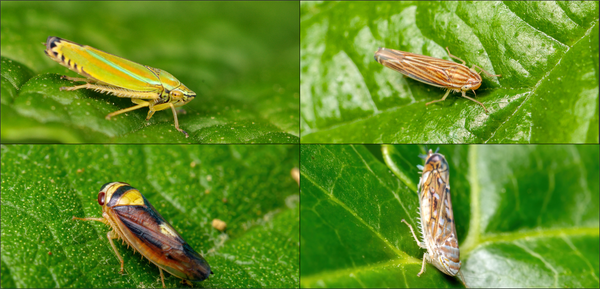
Figure 1: Leafhopper (Cicadellidae) variation in body shape and coloration.
M. Bertone, NCSU
Biology
Leafhoppers become active in spring when adult females insert their eggs in turfgrass leaves. These eggs hatch within a few days when the immature nymphs feed on turf by inserting their piercing-sucking mouthparts into the plant. Nymphs will feed for 1-2 weeks before becoming adults. There are multiple generations throughout the growing season with each generation taking 12-30 days, depending on temperature.
Damage
Leafhoppers are highly active insects that move rapidly by jumping or flying short distances. They are most frequently observed in turfgrass following mechanical or physical disturbances, such as mowing or foot traffic, which often trigger large numbers of leafhoppers to take flight—behaviorally resembling the dispersal patterns of whiteflies in nurseries or greenhouses. As such, leafhopper adult activity, rather than damage, is more common and noticeable in turfgrass. Leafhoppers generally tend to be more active in home lawns, but can occur in other areas.
Nymphs and adults feed on both the upper and lower surfaces of plant tissue and often target newer growth. With a heavy infestation, leafhoppers can cause yellowing or bleaching to the turfgrass, and if examined closely, leaf blades may show signs of stippling (tiny, bleached spots) (Figure 2).
Although they do not target humans or pets, there are a few reported cases of leafhoppers "probing" the skin, which may cause minor discomfort. This behavior can vary by species and is generally not observed in managed turfgrass environments.
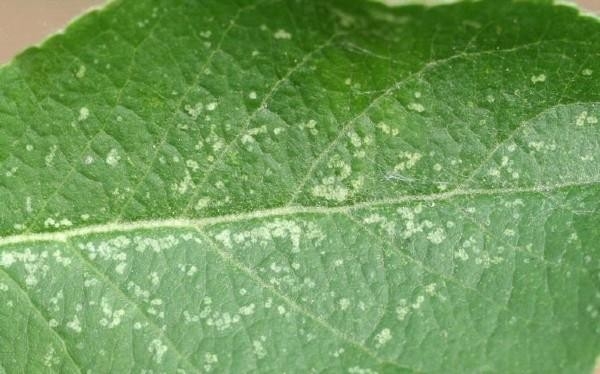
Figure 2: Leafhopper (Cicadellidae) stippling on leaves.
W. Cranshaw, Colorado State University
Control
Leafhoppers rarely cause damage in turfgrass, and chemical treatment is not generally recommended. Leafhoppers are actively suppressed by parasitoids and generalist predators, including ants, spiders, ladybugs, and lacewings, as well as birds and lizards.
Cultural Control
Excessive fertilizer use has been attributed to increases in leafhopper populations. Be sure to conduct the appropriate soil analysis before applying to avoid overfertilizing a turfgrass stand.
Chemical Control
Chemical insecticides for leafhopper control should only be applied for excessively high populations. If leafhoppers are causing discomfort or turfgrass damage, apply contact insecticides, including pyrethroids, carbaryl, and acephate, at the suggested label rate for suppression. Some products may be labeled for spot treatment only in home lawns, so be sure to follow label guidelines when applying. Reinfestation from adjacent areas is likely, so be aware that repeat applications may be necessary.
Publication date: June 24, 2026
N.C. Cooperative Extension prohibits discrimination and harassment regardless of age, color, disability, family and marital status, gender identity, national origin, political beliefs, race, religion, sex (including pregnancy), sexual orientation and veteran status.
NC Cooperative Extension prohíbe la discriminación por raza, color, nacionalidad, edad, sexo (incluyendo el embarazo), discapacidad, religión, orientación sexual, identidad de género, información genética, afiliación política, y estatus de veteran.
Recommendations for the use of agricultural chemicals are included in this publication as a convenience to the reader. The use of brand names and any mention or listing of commercial products or services in this publication does not imply endorsement by NC State University or N.C. A&T State University nor discrimination against similar products or services not mentioned. Individuals who use agricultural chemicals are responsible for ensuring that the intended use complies with current regulations and conforms to the product label. Be sure to obtain current information about usage regulations and examine a current product label before applying any chemical. For assistance, contact your local N.C. Cooperative Extension county center.
N.C. Cooperative Extension prohibits discrimination and harassment regardless of age, color, disability, family and marital status, gender identity, national origin, political beliefs, race, religion, sex (including pregnancy), sexual orientation and veteran status.