
Introduction to Nematodes
Nematodes are microscopic, soilborne roundworms. There are numerous types of nematodes, including both beneficial and damaging, plant-parasitic species. Beneficial nematodes are important members of the soil food web and can function as predators to certain insect pest larva. However, plant-parasitic nematodes feed on plant roots, causing damage that can compromise the health of the plant. Plant-parasitic nematodes can be particularly impactful on bushes, shrubs, and other perennial plantings, including boxwoods.
Although plant-parasitic nematodes are microscopic—typically only 0.01 to 0.04 in. (300 to 1000 μm) long—the damage nematodes can inflict on boxwoods may be visible to the unaided eye as disease symptoms. Root-knot (Meloidogyne spp.), lesion (Pratylenchus spp.), spiral (Helicotylenchus spp.), ring (Mesocriconema spp.), and stunt (Tylenchorhynchus spp.) nematodes can all feed on and cause damage to boxwoods. These nematodes have a broad host range, meaning that in addition to boxwoods, then can often feed upon and cause damage to other ornamental and vegetable plants.
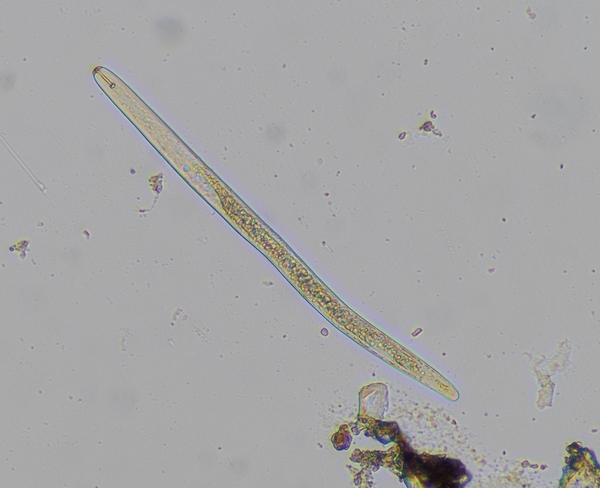
Juvenile lesion nematode (Pratylenchus spp.) viewed under the microscope. The spear-like mouthpart called the stylet is visible in the head of the nematode.
Adrienne Gorny (NCSU)
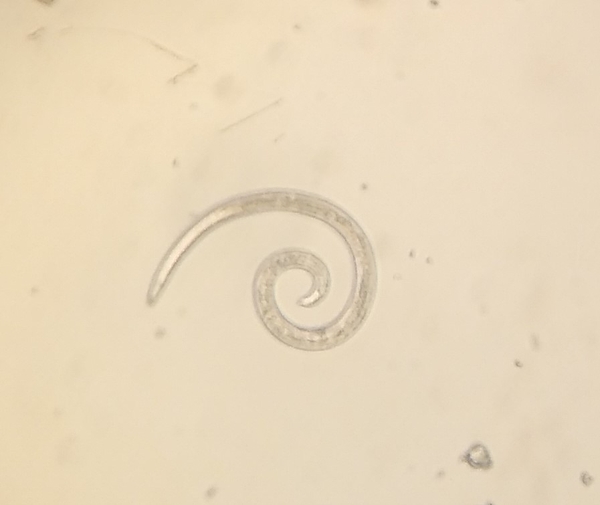
Spiral nematode (Helicotylenchus spp.) viewed under the microscope. Nematodes at rest in a spiral shape is a classic indicator of this nematode.
Adrienne Gorny (NCSU)
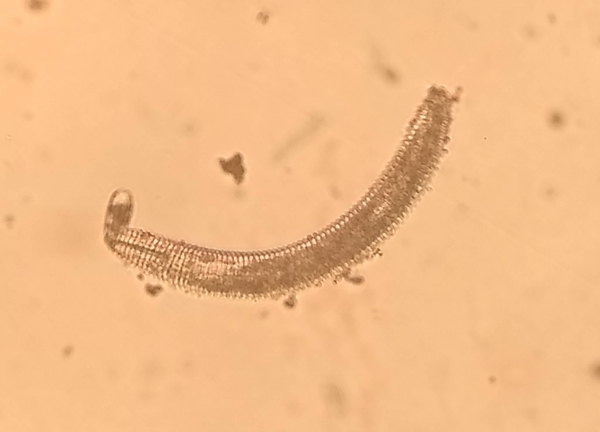
Ring nematode (Mesocriconema spp.) viewed under the microscope. Ring-like bands along the length of nematode body are characteristic of this nematode.
Adrienne Gorny (NCSU)
Symptoms
Aboveground symptoms of plant-parasitic nematodes in boxwood can often mimic nutrient deficiencies and drought stress. Aboveground symptoms can include chlorosis (yellowing) of the foliage, poor growth and stunting, and dieback of branches or sections of the plant. Belowground symptoms of nematodes in boxwoods can include root rotting and generalized damage, root stunting, root galling (in the case of root-knot nematode), and black and brown lesions on roots (often the case for lesion and stunt nematodes).
Because boxwood plantings are often in place for numerous years, nematode populations can build up over time. Thus, symptoms may appear or progress in severity over time.

Chlorosis (yellowing) and dieback of boxwood foliage due to lesion nematode (Pratylenchus spp.)
Kellie Binnicker (NCCE)

Foliage dieback and chlorosis (yellowing) of boxwood foliage due to spiral nematode (Helicotylenchus spp.)
Amy-Lynn Albertson (NCCE)

Foliage dieback of boxwood foliage due to spiral nematode (Helicotylenchus spp.)
Amy-Lynn Albertson (NCCE)
Diagnosing Plant-Parasitic Nematodes in Boxwood
If plant-parasitic nematodes are suspected a boxwood planting, diagnosis can be confirmed through assessment of soil and root samples for the presence of the nematode by a plant disease diagnostic laboratory or nematode assay laboratory. Soil samples for nematode assay services may be submitted to the North Carolina Department of Agriculture & Consumer Services, Agronomic Services (NCDA&CS), Nematode Assay Laboratory, 4300 Reedy Creek Road, Raleigh, NC 27607.
To accurately determine nematode pressure, soil samples should be taken from several areas of the affected planting. Using a soil probe, collect 4 to 6 soil cores around the base of the affected plant or plants, at a depth of 6 to 8 inches. If you do not have a soil core tool, a small shovel or hand trowel also works well. When collecting your soil samples, be sure to scrap away any mulch from the top of the soil (mulch should not be included in the sample). Including small pieces of root within the soil sample can also help the laboratory identify any nematodes present. Combine soil cores in a clean plastic bucket and remove a smaller portion of soil from this larger sample to submit to the Nematode Assay Laboratory. Detailed sampling instructions can be found at the NCDA&CS Nematode Assay Laboratory sampling guidelines.
Management
Cultural
Maintaining optimum conditions for plant growth in terms of soil pH, fertility, and soil moisture will increase the tolerance of boxwoods in situations of low to moderate nematode pressure and will make the plants less susceptible to other biotic stresses.
Frequent incorporation of organic matter of composted leaves, grass clippings, and manure, into the soil is also beneficial for improving soil structure and moisture retention. It will also encourage biological activity which may provide a natural reduction in the population density and impact of plant-parasitic nematodes. However, this method is unlikely to completely eliminate a nematode issue. The use of such organic materials may require additional nitrogen.
Soil solarization (or heating soil under plastic using a greenhouse effect), is an inexpensive and simple method of managing nematodes and other soilborne pathogens. Solarization involves placing a clear, plastic cover over soil that has been lightly wetted, securing the edges tightly to reduce evaporation, and letting it remain for 1 to 2 weeks. This technique will work best during mid-summer, when the sun is directly overhead and air temperatures are high. The technique will also work best in areas subject to direct sun.
If nematode populations are elevated and boxwood plants need to be replaced, soil contaminated with nematodes from around the planting can be removed and replaced with fresh soil. Nematode-free soil can be purchased in garden supply centers. Be sure to dispose of the nematode-contaminated soil in an area where it will not affect other plants. Note that this method will not completely eliminate a nematode infestation, but it may allow sufficient time for new plants to become established before being challenged by nematodes recolonizing the soil.
Unfortunately, there are no known varieties of boxwood that are resistant to plant-parasitic nematodes. This means that all varieties of boxwood may be susceptible to plant-parasitic nematodes.
Chemical
There are few chemical nematicides available to the homeowner for management of nematodes in boxwoods in the home garden. Products containing the nematicide azadirachtin (Molt-X, AzaGuard) can typically be purchased from a garden center or online retailer. It is suggested to test a smaller area for any potential phytotoxicity effects before large-scale applications.
Additional Resources
The NCDA&CS Nematode Assay Lab provides nematode soil detection and diagnostics.
The NC State University Plant Disease and Insect Clinic provides diagnostic and management recommendations.
The NC State Extension Plant Pathology portal provides extensive information on plant disease management.
The North Carolina Agricultural Chemicals Manual provides an up-to-date list of chemicals available for control of nematodes and other diseases and pests. Note that a North Carolina Pesticide Applicators License may be required to purchase and apply some of the products listed in the manual.
Publication date: Sept. 1, 2026
N.C. Cooperative Extension prohibits discrimination and harassment regardless of age, color, disability, family and marital status, gender identity, national origin, political beliefs, race, religion, sex (including pregnancy), sexual orientation and veteran status.
NC Cooperative Extension prohíbe la discriminación por raza, color, nacionalidad, edad, sexo (incluyendo el embarazo), discapacidad, religión, orientación sexual, identidad de género, información genética, afiliación política, y estatus de veteran.
The use of brand names in this publication does not imply endorsement by NC State University or N.C. A&T State University of the products or services named nor discrimination against similar products or services not mentioned.
Recommendations for the use of agricultural chemicals are included in this publication as a convenience to the reader. The use of brand names and any mention or listing of commercial products or services in this publication does not imply endorsement by NC State University or N.C. A&T State University nor discrimination against similar products or services not mentioned. Individuals who use agricultural chemicals are responsible for ensuring that the intended use complies with current regulations and conforms to the product label. Be sure to obtain current information about usage regulations and examine a current product label before applying any chemical. For assistance, contact your local N.C. Cooperative Extension county center.
N.C. Cooperative Extension prohibits discrimination and harassment regardless of age, color, disability, family and marital status, gender identity, national origin, political beliefs, race, religion, sex (including pregnancy), sexual orientation and veteran status.