
Description, Biology, and Distribution
The two species of Scaphytopius leafhoppers important to scout for to prevent the spread of blueberry stunt phytoplasma are the sharp-nosed (S. acutus) and the blueberry leafhopper (S. magdalensis). Scaphytopius acutus is a small brown insect with a pointed head, about 1.5 times as long as the width between their eyes (Figure 1). Males are typically 0.18 inches long, while females are about 0.2 inches long (Figure 3). The wings, thorax, and head are varying shades of brown, and the wings are covered in circular white spots and brown veins. Scaphytopius acutus has a yellowish face, which contrasts with the rest of the body (Figure 2). The squarish section just behind the head (called the pronotum) has five white streaks running linearly to the body, and the triangular section just behind the head (called the scutellum) has light yellow or orange markings. Scaphytopius magdalensis looks similar to the sharp-nosed leafhopper in size and proportions, except for its darker brown coloration. The tip of the nose has one stark white streak down the midline with faint pale streaks on either side. Similar to S. acutus, the pronotum of S. magdalensis has five white longitudinal streaks. However, unlike S. acutus, the color of the pronotum is brown/reddish brown, as is the scutellum. The face of S. magdalensis is dark brown or black, while the wings are dark brown with a yellowish tint and white spots.
Both species have a similar life history and undergo egg, nymph, and adult stages. Adults are abundant in the woods and along forest edges due to the presence of alternate host plants, which include a wide variety of ornamentals, grasses, sedges, bushes, willows, and plants related to blueberries (Ericaeae). Adults may also feed on other crops, including blackberries, raspberries, and cranberries. In the early spring, adults move to commercial blueberry fields while eggs overwinter inside fallen leaves and hatch around the time blueberry buds begin to open. Nymphs are ivory colored, have dark wing pads that make an hourglass pattern, and will go through five nymphal stages before reaching adulthood (Figure 4).
In North Carolina, three generations typically occur each season. Peak populations for each of the three generations occur around May, mid-June, and early October, respectively. At the end of the season, adults will return to the woods to overwinter. Across North Carolina, S. magdalensis has been found in several counties, including Transylvania, Guilford, Orange, Moore, and Pender, while S. acutus has been observed in dozens of counties, from as far west as Swain to as far east as Edgecombe.

Figure 1. An adult S. acutus, also known as the sharp-nosed leafhopper, on a blueberry leaf.
Photo by W. Bertram, Cornell CALS
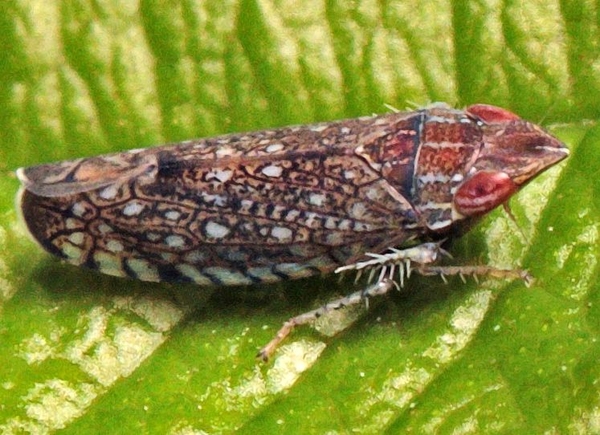
Figure 2. An adult S. magdalensis, also known as the blueberry leafhopper.
Photo by Ken Childs, Hoppers of North Carolina
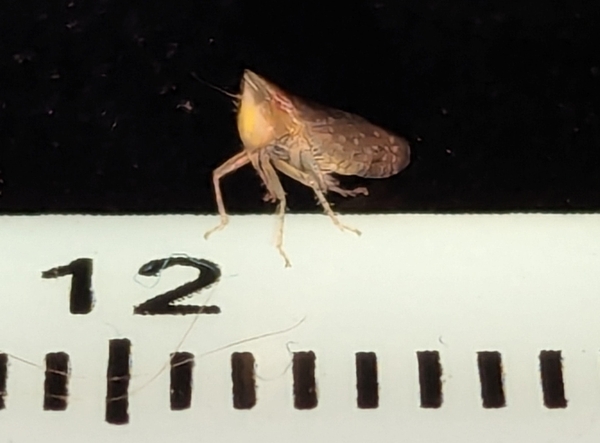
Figure 3. Size of an adult S. acutus.
Photo by Olivia R. Myers, iNaturalist
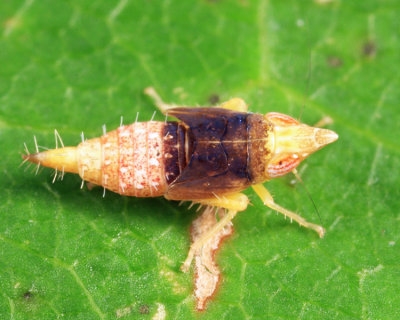
Figure 4. A Scaphytopius leafhopper nymph, showing its white body and dark wingpads.
Photo by Tom Murray
Blueberry Stunt Phytoplasma
Blueberry stunt is a systemic disease caused by a phytoplasma, principally ‘Candidatus Phytoplasma asteris’, transmitted primarily by the sharp-nosed leafhopper, S. magdalensis, though transmission has also been observed by other leafhopper species, including S. acutus. Leafhoppers pick up this disease while feeding on infested bushes and carry it to other hosts through subsequent feedings. Usually, only adults will spread the disease since nymphs are unable to fly due to undeveloped wings. Infected plants are stunted to half the size of healthy plants and excessively bushy, have shortened spaces between leaves (shorter nodes), and have an abnormally high number of branches (Figure 5). Leaves will be yellow along the edge and between veins, small, cupped, and downward-facing (Figure 6), and will prematurely turn bright red in early fall. Often, infected bushes go undetected because symptoms can be subtle, especially early in the disease, or easily mistaken for other diseases. Berry production will be reduced and late in ripening, and the few that grow will be small, hard, and tasteless. Symptoms of blueberry stunt phytoplasma are most noticeable during mid-June and late September. To reduce the spread of blueberry stunt, monitoring generations of Scaphytopius leafhoppers and enacting preventative control is critical.
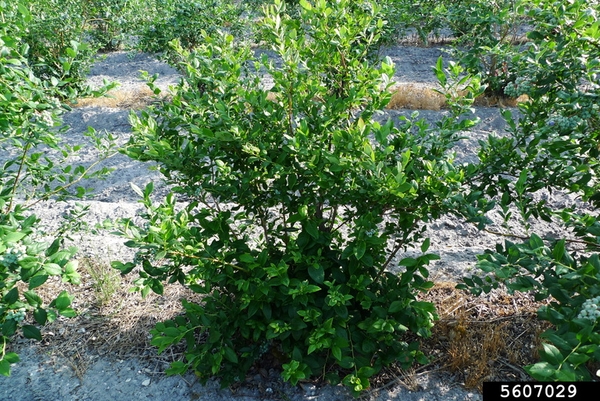
Figure 5. Symptoms of blueberry stunt phytoplasma. Lower branches are excessively bushy and short.
Photo by Gerald Holmes, Bugwood
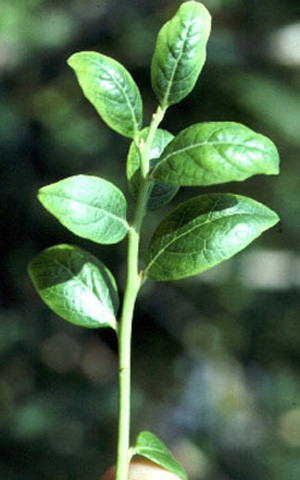
Figure 6. Blueberry leaves affected by blueberry stunt phytoplasma. Symptomatic leaves are smaller, cupped, and downward-facing.
Photo by W. Bertram, Cornell CALS
Scouting and Management
It is essential to monitor leafhopper populations to confirm their abundance in your field before deciding whether to apply insecticides for leafhoppers. Since leafhopper adults enter blueberry fields from wood margins, yellow sticky cards placed in low vegetation along field edges will help monitor their presence. Subsequent spraying should also be targeted along field margins to control incoming disease carriers.
Host plant resistance has previously been observed in six commercial cultivars of rabbiteye blueberry (Vaccinium corymbosum). Scaphytopius magdalensis leafhoppers seem to select rabbiteye blueberries less than other varieties, and those leafhoppers reared on rabbiteye bushes had reduced growth rates and higher nymphal mortality. Breeders have attempted to transfer this resistance to commercial highbush blueberries. However, the research that confirmed these findings was conducted over thirty years ago, and it’s likely that most cultivars are still susceptible to colonization from leafhoppers.
The first generation of Scaphytopius leafhoppers is usually controlled by sprays targeting plum curculio, aphids, and cranberry fruit worm after petal-fall. Agents at Rutgers Cooperative Extension have recommended acetamiprid (Assail 30SG ®), thiamethoxam (Actara ®), imidacloprid (Admire Pro ®), or malathion (Malathion 57EC ®) for control of first- and second-generation leafhoppers. Pyrethrin (Pyganic ®) has also been suggested for controlling Scaphytopius leafhoppers. It is important to note that broad-spectrum insecticides (e.g., pyrethrins, malathion) should be used only when moderate to severe infestations are identified, as they can kill natural enemies, such as predatory and parasitoid insects, that may help control leafhopper and other pest populations. This may lead to exacerbating reinfestations. Insecticides should be applied just before peak flight, typically near the end of August to early September. However, ultimate treatment decisions should be based on population monitoring and the local history of stunt disease. Removing all plants that show symptoms of stunt disease is a vital step in reducing the spread of the disease. This should be done after insecticide treatment to avoid the movement of leafhoppers from infested to healthy plants, which would increase the severity of disease in your fields.
Additional Resources
Hoppers of North Carolina: Spittlebugs, Leafhoppers, Treehoppers, and Planthoppers
Virus and Virus-Like Diseases of Blueberry
Blueberry Pest in Detail: Sharp-nosed Leafhopper
Resistance in Blueberries to Feeding and Oviposition by the Sharpnosed Leafhopper
Publication date: Nov. 30, 2025
Recommendations for the use of agricultural chemicals are included in this publication as a convenience to the reader. The use of brand names and any mention or listing of commercial products or services in this publication does not imply endorsement by NC State University or N.C. A&T State University nor discrimination against similar products or services not mentioned. Individuals who use agricultural chemicals are responsible for ensuring that the intended use complies with current regulations and conforms to the product label. Be sure to obtain current information about usage regulations and examine a current product label before applying any chemical. For assistance, contact your local N.C. Cooperative Extension county center.
N.C. Cooperative Extension prohibits discrimination and harassment regardless of age, color, disability, family and marital status, gender identity, national origin, political beliefs, race, religion, sex (including pregnancy), sexual orientation and veteran status.