
Why Cultivar Selection is a “Profit Decision” in North Carolina Broccoli
In North Carolina, broccoli performance is strongly shaped by short planting windows, rapid temperature swings, and high disease pressure during humid periods. Cultivar choice determines whether the crop reaches harvest during the target weather window and whether heads meet market standards (uniform domes, acceptable color, minimal defects). When a cultivar is mismatched to the season or region, the most common outcomes are uneven maturity, poor head quality (including heat-related deformation), higher cull rates, and greater pesticide and labor inputs to maintain marketability. NC planting windows also differ by region, which further increases the risk of selecting the wrong maturity class for the farm location.
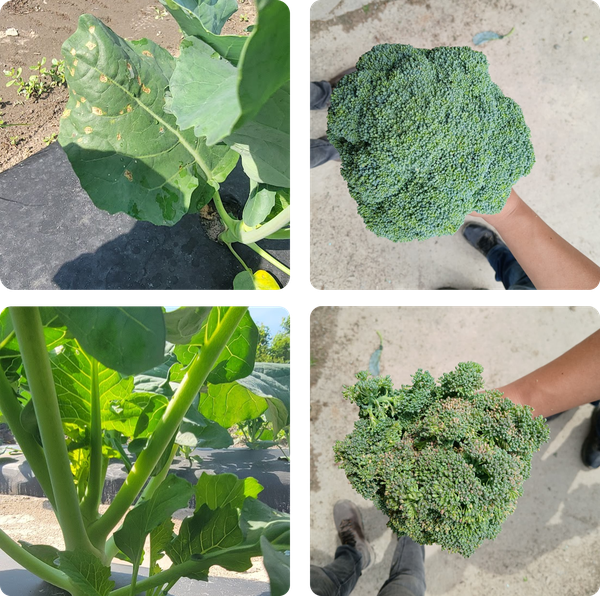
Broccoli head classification (marketable and unmarketable), secondary stem development, and incidence of foliar disease.
Photo by Emmanuel Torres
North Carolina Conditions That Make Cultivar Selection Especially Critical
Temperature and Season Length
Eastern NC spring and fall planting windows are relatively narrow (for example, eastern NC spring roughly mid-February to mid-April; fall roughly early August to mid-September), and western NC recommendations differ substantially (spring plantings extend later, while fall is often not recommended). This means that “days to maturity” and “holding ability” (how long a head stays tight and marketable before loosening) become primary selection criteria.
Heat Stress Risk
Warm spells during head initiation can cause quality losses, including misshapen or deformed crowns. Selecting cultivars with documented heat tolerance for warmer windows reduces the probability of deformities and helps stabilize pack-outs.
Disease and Pest Pressure
Humid weather favors foliar and head diseases, and cultivar tolerance can be the difference between a manageable outbreak and an economic failure. NC State Extension materials emphasize using varieties with tolerance to common diseases as a core risk-reduction strategy, especially when seasonal disease pressure is predictable.
What “Correct Cultivar Selection” Means in Practice
Correct cultivar selection is not about picking a single “best variety.” It is about matching genetics to (1) region, (2) planting date, (3) production system, and (4) market requirements.
-
Match cultivar maturity to the NC planting window.
Select cultivars by maturity class (early, mid, late) and verify that expected harvest aligns with your target weather window and labor plan. In short windows, cultivars that mature too slowly may push head development into heat, while cultivars that mature too quickly may concentrate harvest more than the farm can handle, increasing over-maturity losses. - Select for head quality traits that protect pack-out.
For fresh market and crown-cut broccoli, prioritize:- Uniform dome shape and bead size (tight florets, minimal unevenness)
- Color stability (avoid cultivars that lighten or purple under stress if that is penalized in your market)
- Holding ability (delays loosening in warm or variable conditions)
These traits directly affect grading time, boxing efficiency, and buyer acceptance.
- Use disease tolerance as a baseline, not a bonus.
In NC, disease tolerance should be treated as a baseline risk-management trait, especially for windows with high humidity or known disease history in the field. Practical examples include prioritizing cultivars with tolerance to diseases that frequently reduce head quality and marketability (for example, downy mildew during wet periods).
-
Choose cultivars with stress tolerance that fits your season.
For warmer windows, heat tolerance is often a primary filter. For cooler windows (or mountain production), cold tolerance and stability under low temperatures can be more important. Multi-year regional trial work in the eastern US focused heavily on identifying heat resistance and high quality material specifically suited to eastern conditions, underscoring how location-specific broccoli genetics can be.
-
Diversify cultivars to reduce harvest and market risk.
A practical approach for commercial farms is to plant two to three cultivars within the same season that differ slightly in maturity and stress tolerance. This spreads risk, extends harvest, and reduces the chance that a single weather event or disease outbreak causes a whole-field loss.
A Field-Ready Cultivar Selection Checklist for NC Growers
Use this checklist when choosing cultivars for a specific planting:
- Region and window: Is this eastern NC spring, eastern NC fall, or a western NC spring/midsummer system?
- Target harvest week: When do you need to harvest to avoid heat or early frost risk?
- Days to maturity: Does the cultivar mature inside your safe harvest window?
- Heat tolerance: Required for warm windows and late plantings; confirm with trial results where possible.
- Disease package: Does the cultivar have tolerance to the diseases you routinely see (field history matters)?
- Market fit: Crown-cut vs bunching, head size targets, bead size expectations, color requirements.
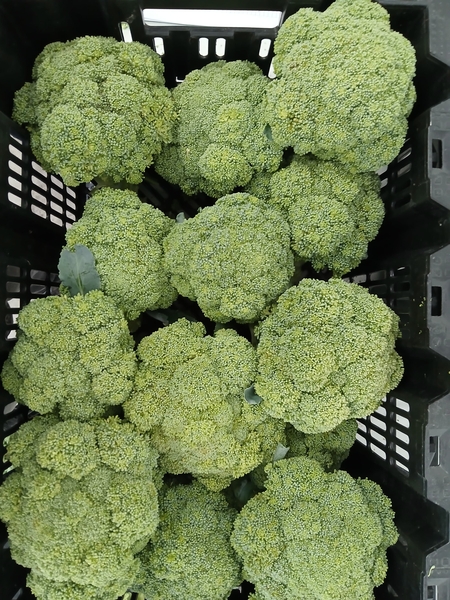
Broccoli heads harvested in Clinton, NC
Photo by Tomas Quezada
2025 Broccoli cultivar evaluation.
Whenever possible, broccoli cultivar selection should be guided by regional performance data rather than seed catalog descriptions alone. NC Extension programs and multi-state initiatives have evaluated a wide range of broccoli cultivars under eastern U.S. conditions to identify material with improved tolerance to heat stress and regional disease pressure, providing critical information to reduce production risk in North Carolina. Building on this approach, the Torres Lab conducted a field evaluation in 2025 of eight broccoli cultivars under head-stress conditions in eastern North Carolina. The trial was established in April on black plastic mulch using 20 plants per plot with four replications. Cultivars evaluated included Asteroid, Castle Dome, Eastern Crown, Emerald Crown, Imperial, Millennium, Green Magic, and Eastern Magic.
| Evaluated Cultivar | Crown average weight [grams per crown (ounces per crown)] |
|---|---|
| Asteroid | 462.6 grams (16.3 ounces) |
| Castle Dome | 449.5 grams (15.8 ounces) |
| Eastern Crown | 435.6 grams (15.4 ounces) |
| Eastern Magic | 541.1 grams (19.1 ounces) |
| Emerald Crown | 364.4 grams (12.9 ounces) |
| Green Magic | 526.9 grams (18.6 ounces) |
| Imperial | 418.4 grams (14.8 ounces) |
| Millennium | 513.1 grams (18.1 ounces) |
*28 grams in an ounce
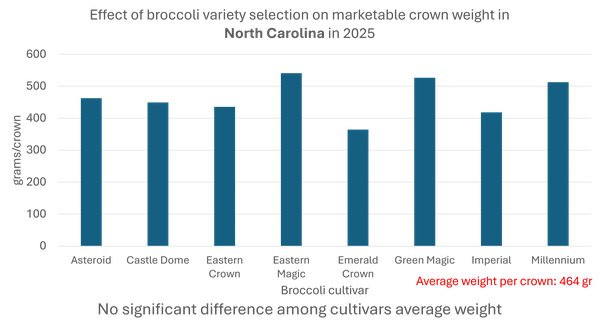
Crown weight of eight broccoli cultivars evaluated under North Carolina field conditions.
by Emmanuel Torres
Practical Recommendations for Growers
For commercial operations in NC, treat cultivar selection as an integrated management decision. Start with the correct planting window for the region, then filter cultivars by maturity and stress tolerance (especially heat tolerance for warmer windows), and only then fine-tune for head quality and market specifications. Finally, validate your short list with regional trial data and a small on-farm strip trial before committing large acreage.
Publication date: Dec. 28, 2025
N.C. Cooperative Extension prohibits discrimination and harassment regardless of age, color, disability, family and marital status, gender identity, national origin, political beliefs, race, religion, sex (including pregnancy), sexual orientation and veteran status.