
Biology and Damage to Tobacco
Tobacco budworm (Chloridea virescens) larvae feed on tobacco foliage in the bud preflowering and on flowers pretopping. Adults emerge in late spring, and females often lay a single white egg per bud, rarely 2 eggs per bud when large populations are present. Larvae do not begin to appear in tobacco until roughly 4 weeks after transplant. There are typically 4 generations per year in North Carolina. Larvae progress through 5 to 6 instars, and development takes between 21 to 25 days. Tobacco budworms overwinter as pupae in the soil. Caterpillars vary greatly in color. They seem to take on the color of the leaves or flower they are eating: green, pink, red, or maroon forms are described. Consistent features include small, dot-like black 'microspines' that give the body a rough texture. Later instars typically have a brown head and stripes along the body. Larvae can reach up to 1.4 inches long. Adult moths are active during the day and can be seen resting on tobacco leaves. Moths are pale green with three nearly parallel lines and 1-1.5 in wingspan. Cotton and soybeans also serve as hosts for tobacco budworm larvae.
Tobacco budworm feeding results in holes in foliage and can destroy flowers and seed capsules in seed production. This type of damage is the most common caused by tobacco budworm and does not typically result in measurable yield loss. This is because budworm injury occurs prior to topping, while plants are still growing, and the plant can compensate for the weight loss to tobacco budworm feeding. In some cases, tobacco budworm feeding can result in the destruction of the apical growth point, prematurely topping the plant. This type of damage is of greater economic concern, because it potentially increases labor costs for sucker control; however, it is a much rarer type of damage (Figure 1).

Figure 1. Budworm damage. Holes in older leaves due to tobacco budworm feeding earlier in the growing season. Note that these holes have smooth edges.
Photo by Lorena Lopez
Similar Lepidopteran Pests
Tobacco budworm and corn earworm adults can be differentiated by the color of their wings, most of the time (Figure 2 and Figure 3). Corn earworm larvae (Helicoverpa zea) may also be present in tobacco, and these 2 species are difficult to distinguish between as larvae without magnification (Figure 4). These cannot be separated when 1-2 instars are present, only when advance instars are present. Tobacco budworms and corn earworms are two common crop-damaging caterpillars. They both feed on a variety of crops, including tobacco, cotton, and soybeans, and look nearly identical. How can you tell them apart? See the video below for a guide to differentiating between these species.
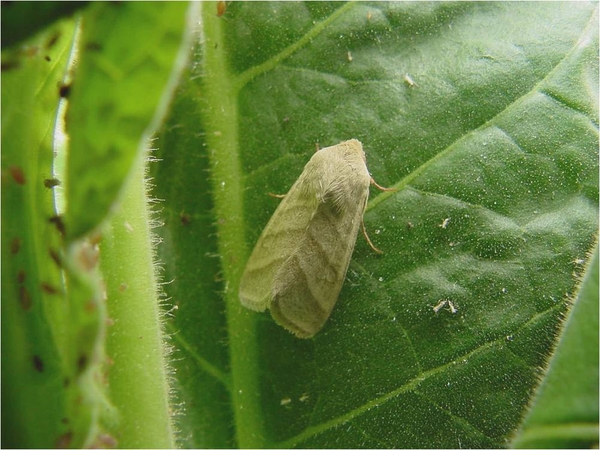
Figure 2. Tobacco budworm adult resting in tobacco leaf.
Photo by Clyde Sorenson.
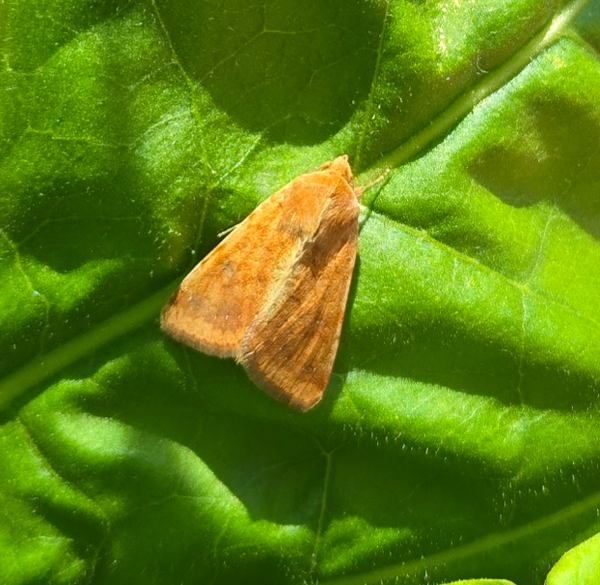
Figure 3. Corn earworn adult resting in tobacco leaf.
Photo by Lorena Lopez
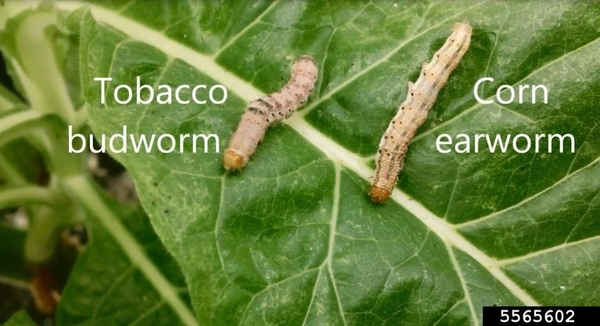
Figure 4. Comparison between larvae of tobacco budworm and corn earworm.
Photo by Aurora Toennisson, North Carolina State University, Bugwood.org
Scouting for Tobacco Budworms
Tobacco budworm infestations typically develop between 4 and 8 weeks after transplant. Start scouting for tobacco budworm larvae no later than 4 weeks after transplant and continue weekly until 1 to 2 weeks before topping. Because tobacco budworm larvae prefer to feed on the bud and flowers, they are not pests after topping, and do not need to be included in monitoring efforts after this point. Tobacco budworm larvae prefer to feed on new growth. Prior to flowering, they feed within the bud. Once plants button and flower, tobacco budworm moths strongly prefer to lay their eggs on flowers, and larvae are most often found in flowers or seed pods.
There is no need to observe lower stalk leaves for tobacco budworms. In fact, holes present on these leaves may be due to old budworm damage and should not be included in scouting records. When scouting plants for tobacco budworm larvae, carefully observe the bud. You may need to peel back the leaves to see the inside of the bud (Figure 5).
“Frass”, or worm droppings, in and around the bud is often a key indicator of budworm infestation. You may also see small holes that have been eaten away in the “tips” or the small leaves around the bud of the plant. Carefully check the bud for tobacco budworm larvae. If you do not observe larvae within the bud, inspect the tops and undersides of leaves immediately around the bud. On cool mornings, larvae may crawl out of the bud. On hot days, they may be deep inside a tightly sealed bud.
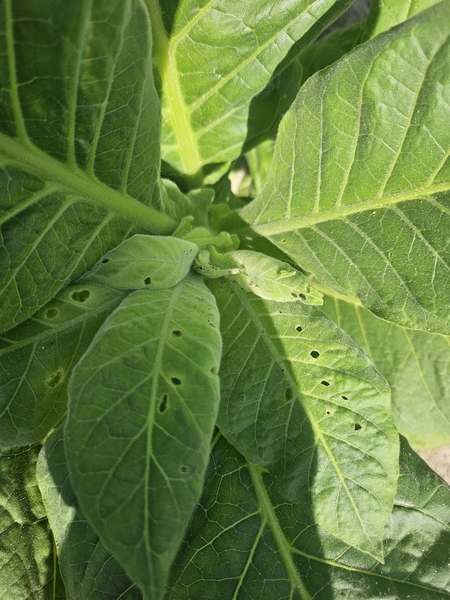
Figure 5. Small budworm larvae and damage to bud and surrounding leaves.
Photo by Lorena Lopez
Thresholds and Management
Before the crop flowers, treat when 10% or more of the plants checked are infested with budworms. This economic threshold for tobacco budworms is based on infested with live larvae. Damaged plants without larvae present do not count as infested. Budworms will not usually cause significant loss after buttoning and should not be counted after that time. If budworm populations are at or near threshold but plants will be topped within 2 weeks, treatment is not recommended because limited damage will occur before topping and after topping, budworm are no longer a pest. Timely topping will reduce budworm populations and damage. This threshold is extremely conservative; based on much recent research, tobacco budworms must generally reach much higher populations to cause economic loss under the growing conditions found in most of North Carolina.
There are multiple insecticides labeled for control of tobacco budworms that can be considered when the threshold is reached or excedeed. Be aware that some of this products may have long pre-harvest intervals to considered up to 40 days (lambda-cyhalothrin, Warrior II®). If multiple insect pests are present in the field when thresholds for budworms are reached, consider applying products that can takle most of the insect pests present to minimize insecticide use. For instance, when early budworm infestations are present, thrips populations may be present. NON-neonicotinoid insecticides such as spinosad (Blackhawk®) and lambda-cyhalothrin+chlorantraniliprole (Besiege®) are effective against budworms and can suppress tobacco thrips. Similarly, when early infestations of hornworms are present, various insecticides can be used to tackled both budworms and hornworms, if the thresholds have been reached. No insecticide applications are reccomended if budworm infestation is below 10%.
Some active ingredients labeled for budworms are related to leaf residue concerns when applied late in the season or close to harvest. These include acephate, chlorantraniliprole, and cyantraniliprole. Make sure to discuss any insecticide residue concerns with buyers before considering applications with this products late in the season.
See the Flue-Cured Tobacco Guide or the North Carolina Agricultural Chemicals Manual for registered materials, rates, and applications recommendations.
Biological Control
Tobacco budworm caterpillars may be killed by parasites, predators, or diseases but still have caused some damage to the plant before dying. The parasitic wasp Campoletis sonorensis (Cameron) (Ichneumonidae) kills small budworms while another parasitic wasp Cardiochiles nigriceps Viereck (Braconidae) (Figure 6) kills large budworms near pupation. Predators include several Polistes spp. paper wasps which will kill larvae to feed to their larvae.
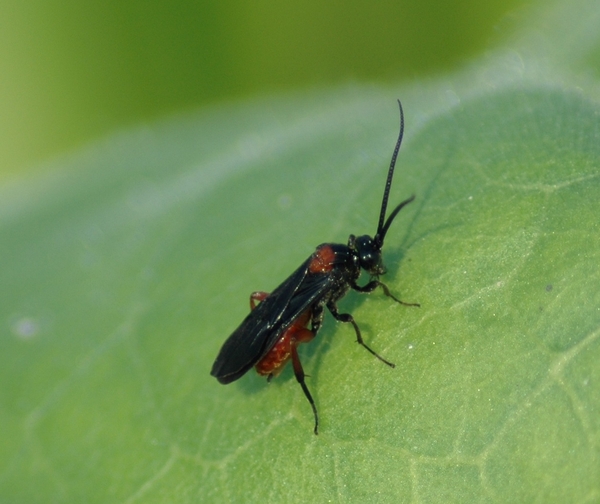
Figure 6. Cardiochiles nigriceps, a parasitoid of the tobacco budworm.
Photo by Sally Taylor
Publication date: July 1, 2025
N.C. Cooperative Extension prohibits discrimination and harassment regardless of age, color, disability, family and marital status, gender identity, national origin, political beliefs, race, religion, sex (including pregnancy), sexual orientation and veteran status.