
Biology
Most species of adult whiteflies have a wingspan of less than 0.12 inches and a body length of 0.04 to 0.08 inches. Both males and females have functional mouthparts and two sets of membranous wings, which are covered in a fine wax powder, giving them a floury or dusty appearance (Figure 1 and Figure 2). Different species range in color from the white-colored sweetpotato whitefly (Bemisia tabaci), which honors the common name of the group, to the dusky brown of the citrus blackfly (Aleurocanthus woglumi). The most notable species of whitefly that feeds on blueberries in North Carolina is Tetraleurodes ursorum, also known as the “bearberry whitefly” since it was first reported in the common bearberry plants (Arctostaphylos uva-ursi).
Like all whiteflies, T. ursorum feeds on the phloem of plants using needle-like mouthparts and produces a sugary excretion called honeydew. Excessive buildup of this honeydew on foliage can promote the proliferation of sooty mold, reducing the photosynthetic capacity of leaves covered by the fungal growth. T. ursorum eggs are elongated and laid near each other on the underside of blueberry leaves in groups, patterns of spirals, arcs, or parallel arcs. Once eggs hatch, whitefly immatures go through four nymphal stages, or instars. T. ursorum nymphs are oval and dark blue or blackish in color, about 0.03 inches long and 0.2 inches wide, with white secretions around the base but no distinct fringe, and no dorsal secretion. First instars, also known as "crawlers", are highly mobile and the only stage that moves. They initially search for a safe place to insert their stylet to feed, usually on the underside of leaves. Once settled, they molt into a second instar and transition to a sessile stage (permanent immobile stage). These sessile immatures of T. ursorum are oval and flat and have reduced legs and antennae (Figure 3). They then mature into a stage generally called a pupa, but it is in reality a non-feeding nymphal instar. The term "pupa" is a misnomer when referring to whiteflies because they do not undergo complete metamorphosis. Adults emerge from the non-feeding nymphal stage with black eyes and can begin mating and laying eggs within 48 hours of emergence. The exact lifespan of T. ursorum is unsure, but most whitefly species complete their lifecycle between 21 and 36 days and typically lay around 25 eggs per day.
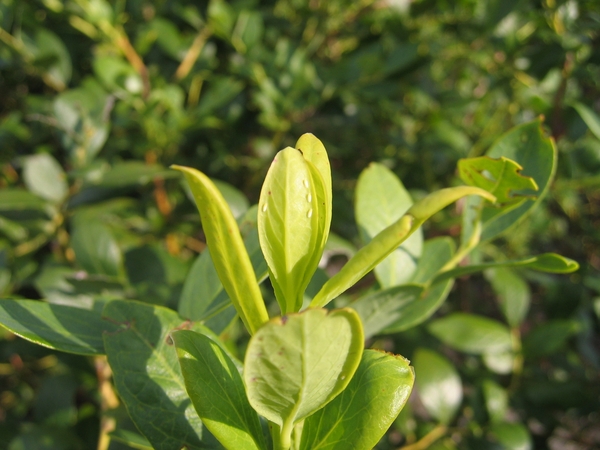
Figure 1. Adult Tetraleurodes ursorum whiteflies on blueberry in North Carolina (2010).
Photo by Bill Cline

Figure 2. Close up of Tetraleurodes ursorum adults in young blueberry leaves (2010).
Photo by Hannah Burrack

Figure 3. Tetraleurodes ursorum immature stages looked through an stereomicropscope, showing characteristic fringes of the immatures.
Photo by Lorena Lopez
Scouting and Management
Tetraleurodes ursorum whiteflies are known to feed primarily post-harvest on blueberries. The impact of infestations of this whitefly species on North Carolina blueberries is unknown, and there is no evidence that it is a significant contributor to economic damage. However, it has been reported as a major threat to Georgia blueberries in recent years, requiring chemical applications due to severe and extensive infestations. There are no current economic thresholds for whiteflies in blueberries. Economic thresholds for other whitefly species infesting food crops, such as the sweetpotato whitefly in tomatoes, exist (5 nymphs/10 leaflets), but the sweetpotato whitefly has been widely studied, and its economic impact on tomato may not be comparable to that of T. ursorum in blueberries. Nonetheless, the presence of tens of whitefly immatures per blueberry leaf may be considered a large population or severe infestation (Figure 4).
In North Carolina, extremely high numbers have been observed in blueberries in some years, completely covering the undersides of leaves with nymphs and the tops with sooty mold resulting from honeydew accumulation; nonetheless, this is uncommon (Figure 5). Under high infestation levels, T. ursorum may continue to feed on bushes through the fall until foliage is dropped. Symptoms of infestation may include high densities of larvae and adults, the appearance of honeydew and/or sooty mold on the underside of leaves (Figure 6), or leaf yellowing and loss under large infestations. In addition to direct examinations of new flushes and young leaves, hanging sticky traps at canopy height, close to harvest termination, and during post-harvest can also help detect early colonization by adult whiteflies.
When large populations of T. ursorum are infesting blueberries, insecticide applications may be needed for control of T. ursorum. Field studies from the University of Georgia recommend applying imidacloprid (Admire Pro®) via drip irrigation, or acetamiprid (Assail®) or spirotetramat (Movento®) as foliar sprays. From these products, only imidacloprid is labeled for whiteflies in blueberries. The remaining insecticides are registered for multiple other insect pests in blueberry and may provide secondary control of whiteflies when sprayed for other insect pests like leafhoppers that may overlap with whitefly populations. Spray coverage is essential for controlling whiteflies, as they primarily feed on the undersides of leaves. Therefore, using high spray volumes (~80-100 gallons per acre) is recommended to achieve optimal spray coverage for control. Concentrated soaps (e.g., M-Pede®) and neem oil may provide some level of whitefly suppression.
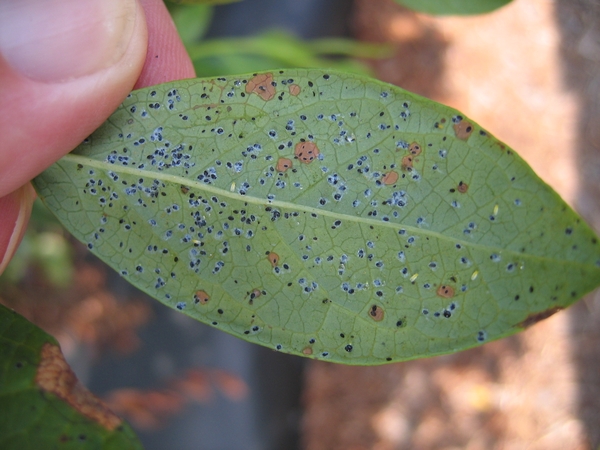
Figure 4. Blueberry leaf showing many Tetraleurodes ursorum immatures in the underside of the leaf, characteristic of large populations of this pest in blueberries (2010).
Photo by Bill Cline
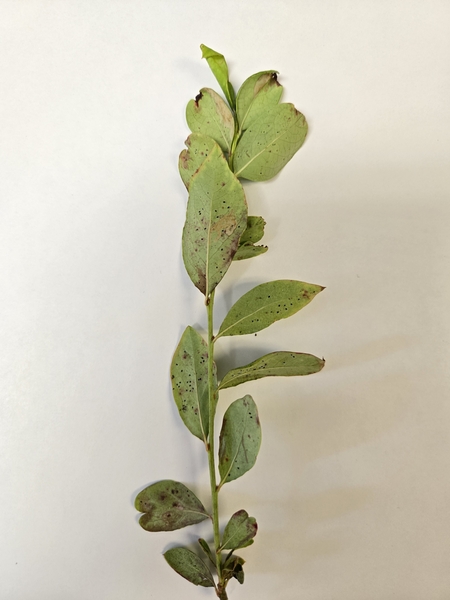
Figure 5. Blueberry branch showing fewer numbers of T. ursorum per leaf (taken in 2025) compared with Fig. 3 taken in 2010.
Photo by Lorena Lopez
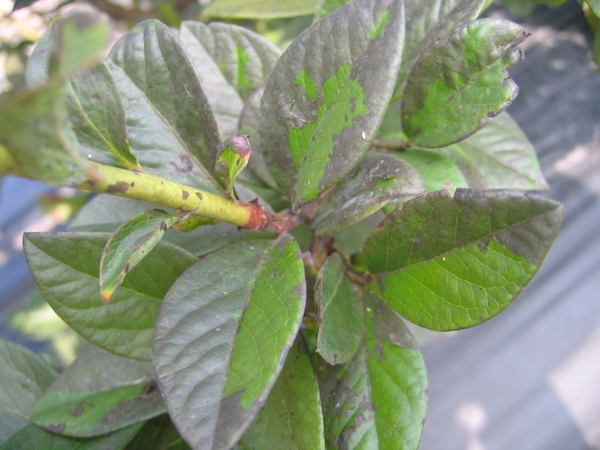
Figure 6. Blueberry leaves showing sooty mold growth due to T. ursorum honeydew accumulation (2010).
Photo by Bill Cline
Biological Control
Promoting beneficial insects has demonstrated to contribute to the suppression of other whitefly species in food crops, and could potentially reduce whitefly populations in blueberry patches. Planting a variety of flowering plants, such as dill (Anethum graveolens), fennel (Foeniculum vulgare), or yarrow (Achillea millefolium) may provide nectar for naturally occurring ladybugs, lacewings, and parasitic wasps, which could help control whitefly populations present in nearby blueberry plants. There are parasitoid wasps that prey upon T. ursorum, since parasitized larvae have been found in NC blueberry samples. However, the parasitoid species are still unknown, and using commercially available parasitoids such as Encarsia formosa, which specialize on greenhouse whiteflies, is not guaranteed to target bearberry whitefly. Finally, pruning bushes that consistently host large numbers of whiteflies could help reduce their numbers.
Additional Resources
Management of Whiteflies in Blueberries
Whiteflies in Blueberries - should we be concerned?
Publication date: Nov. 4, 2025
Recommendations for the use of agricultural chemicals are included in this publication as a convenience to the reader. The use of brand names and any mention or listing of commercial products or services in this publication does not imply endorsement by NC State University or N.C. A&T State University nor discrimination against similar products or services not mentioned. Individuals who use agricultural chemicals are responsible for ensuring that the intended use complies with current regulations and conforms to the product label. Be sure to obtain current information about usage regulations and examine a current product label before applying any chemical. For assistance, contact your local N.C. Cooperative Extension county center.
N.C. Cooperative Extension prohibits discrimination and harassment regardless of age, color, disability, family and marital status, gender identity, national origin, political beliefs, race, religion, sex (including pregnancy), sexual orientation and veteran status.