
Description and Biology
Alternaria black spot or Alternaria rot is caused by Alternaria spp. and is not considered a major disease. It typically occurs as a secondary issue in fields where strawberry fruit have been left over-ripe in the field or damaged by hail, excessive mite injury, natural cracking, or other sources of physical or biological wounding. The fungus does not cause primary injury but instead colonizes and grows on already damaged fruit.
Symptoms on fruit appear as small, irregular spots that are slightly sunken and appear light green to black in color as spores grow on the spot. These symptoms may look similar to other major fruit diseases, such as Anthracnose Fruit Rot of Strawberry.
Management of Alternaria black rot includes removing over-ripe fruit from the field, minimizing wounding, and managing mites.
Mite management:
Cyclamen Mites in Strawberries
Twospotted Spider Mite
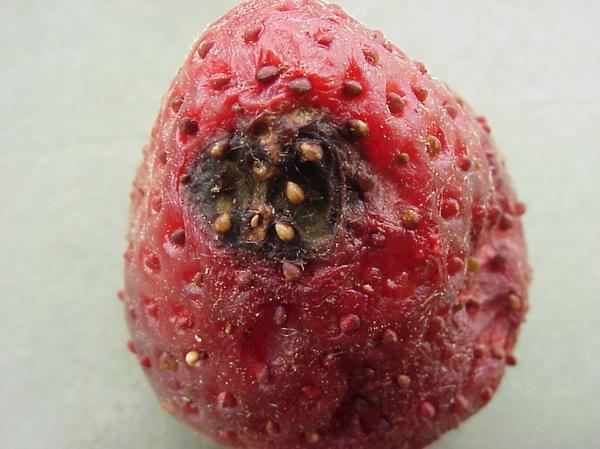
Figure SS-1: Alternaria black spot on strawberry showing lesion in fruit colonized by the black mold that also has a greenish hue.
Frank J. Louws
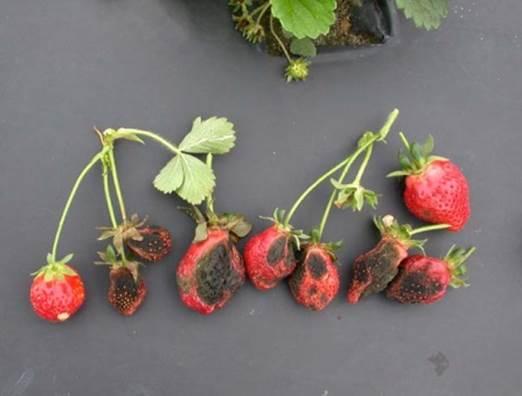
Figure SS-2: Alternaria black spot on strawberry showing lesions on fruit colonized by Alternaria alternata with a dark black moldy appearance.
Frank J. Louws
Publication date: July 29, 2014
Reviewed/Revised: April 23, 2026
N.C. Cooperative Extension prohibits discrimination and harassment regardless of age, color, disability, family and marital status, gender identity, national origin, political beliefs, race, religion, sex (including pregnancy), sexual orientation and veteran status.
The use of brand names in this publication does not imply endorsement by NC State University or N.C. A&T State University of the products or services named nor discrimination against similar products or services not mentioned.
N.C. Cooperative Extension prohibits discrimination and harassment regardless of age, color, disability, family and marital status, gender identity, national origin, political beliefs, race, religion, sex (including pregnancy), sexual orientation and veteran status.