
Biology
A number of different aphid species feed on strawberries in North Carolina, including the strawberry aphid (Chaetosiphon fragaefolii, Fig. 1), potato aphid (Macrosiphium euphorbae), and green peach aphid (Myzus persicae). In previous years, occurrences of Chaetosiphon minor and the yellow rose aphid (Rhodobium porosum, Fig. 2) have been reported on strawberries in some parts of the state.
Most species have complex life cycles in which they alternate between generations of parthenogenic ("self-cloning") females that give birth to live young and generations of winged males and females that reproduce sexually. Immature aphids, called nymphs, are wingless and can go from birth to adulthood in less than two weeks, so populations have the potential to increase rapidly. Fortunately, a wide variety of natural enemies eat aphids, so damaging infestations are very rarely an issue in North Carolina strawberries.
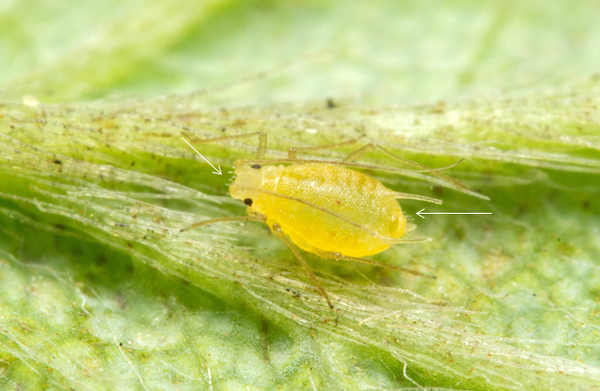
Figure 1. Chaetosiphon minor, one of the aphids found in North Carolina strawberries.
Matt Bertone
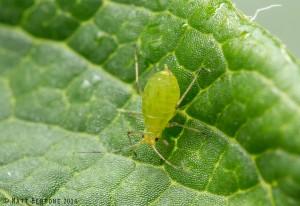
Figure 2. Yellow rose aphid.
Matt Bertone
Damage
Small aphid populations can be exacerbated under covers used for freeze protection during winter or early spring. Beware of any aphids present on your strawberries before placing the covers. After protecting strawberries with covers for multiple days or sometimes weeks, the number of winged and wingless aphids can increase on the plants, resulting in a buildup of winged aphids in the covers when removed (Fig. 3).
At very high densities on young plant tissue (Fig. 4), aphids cause water stress, wilting, and reduced plant growth. The honeydew that aphids excrete accumulates and can cause sooty mold growth on leaves, limiting photosynthesis and fruit development and rendering the fruit unmarketable (Fig. 5). However, population densities high enough to cause this type of damage are rare in North Carolina.
Many aphids can vector viruses in strawberries. However, virus transmission is usually only problematic in multi-year planting or nurseries, not in annual-grown strawberries.
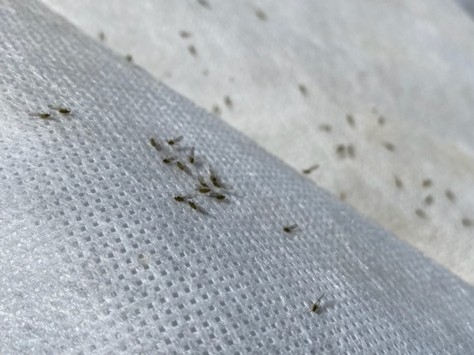
Figure 3. Winged aphids in freeze protection covers after multiple days covering a strawberry field.
Photo by Lorena Lopez

Figure 5. Sooty mold caused by severe aphid infestation (UF/IFAS)
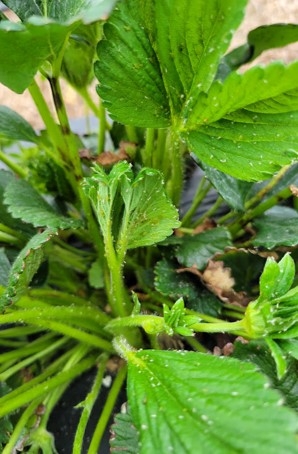
Figure 4. High numbers of aphids on strawberries
Lorena Lopez
Sampling
Aphids are most abundant on the underside of strawberry leaves and around the crown. To sample for aphids, collect 40 leaves from randomly selected plants per acre. In mature, dense canopies, aphids tend to concentrate in the middle of the plant, so leaves should be taken from that zone. Inspect the leaves and count how many are infested with wingless and non-parasitized aphids. Visibly parasitized aphids appear brown, swollen, and dry, and have already been killed by a parasitoid wasp that developed inside them (Fig. 6). Specific economic thresholds for North Carolina have not been established, but work in California indicates that if 30% of sampled leaves contain aphids, the infestation level justifies insecticide applications.
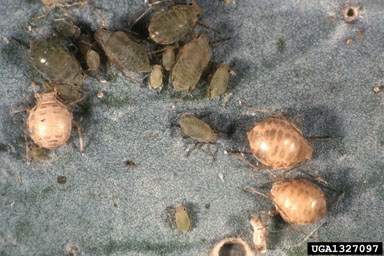
Figure 6. Parasitized aphids. Large, swollen, tan aphids are mummies. These aphids have benn parasitized. Green aphids are healthy aphids.
Photo by Alton N. Sparks, Jr. (UGA, Bugwood)
Management
Conventional
Systemic and foliar-applied materials can be used to control aphids on strawberries. Care must be taken when applying these materials to avoid harming bees. Beware that pyrethroids may exacerbate aphid infestations due to non-target effects on aphids' natural enemies. Some products, such as flonicamid (Beleaf), provide more selective activity against aphids than pyrethroids, minimizing harmful effects ot natural enemies.
Refer to the North Carolina Agricultural Chemicals Manual for materials recommended for use against aphids in North Carolina and the Southern Region Small Fruit Consortium Strawberry IPM Guide for regional recommendations.
Organic
OMRI approved insecticidal soaps are available for controlling aphids. Overuse of insecticidal soap can damage strawberry plants. Refer to the North Carolina Agricultural Chemicals Manual for materials recommended for use against aphids in North Carolina and the Southern Region Small Fruit Consortium Strawberry IPM Guide for regional recommendations.
Biological
Aphids are frequently kept under control by numerous predatory insects including: parasitoid wasps, syrphid fly larvae, lacewing larvae and lady beetles and their larvae. These predators occur naturally around strawberry fields, and purchasing additional predators is usually not necessary or cost effective.
More Information
What to watch for: Aphids in strawberries
North Carolina Agricultural Chemicals Manual
Strawberry IPM Guide - Southern Region Small Fruit Consortium
Publication date: May 15, 2014
Reviewed/Revised: March 20, 2025
N.C. Cooperative Extension prohibits discrimination and harassment regardless of age, color, disability, family and marital status, gender identity, national origin, political beliefs, race, religion, sex (including pregnancy), sexual orientation and veteran status.