
Asparagus is a versatile, nutritional powerhouse that pairs well with fish, beef, shrimp, veal, chicken, and pasta, and is also great on its own as a side dish or appetizer. Rich in antioxidants, fiber, and vitamins, asparagus is as nutritious as it is delicious. One of the first vegetables to arrive in spring, this beautiful perennial looks like a soft fern in the landscape.
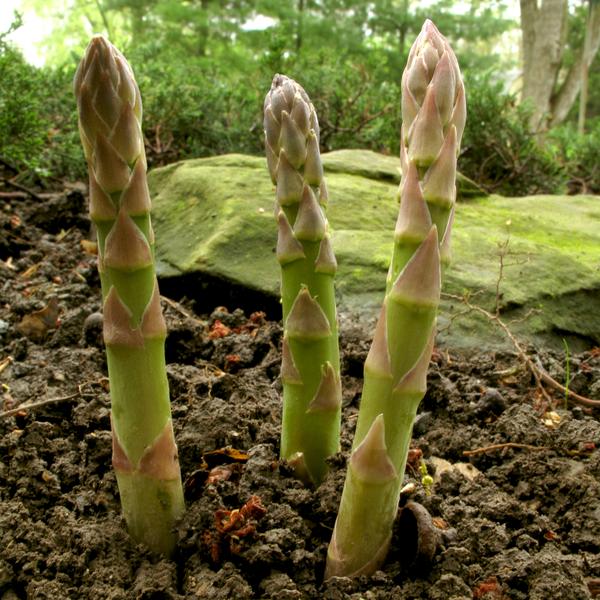
Asparagus growing.
Photo by twoellis/Bigstock.com
Growing
When and Where to Plant
Asparagus is one of the few perennial vegetables we can grow in North Carolina. Once established, an asparagus bed can produce for many years. Plant asparagus in winter, between mid-January and mid-March, while the plants are dormant. Plants will be most productive when grown in full sun. For best results, plant asparagus in deep soils that have been well amended with compost. Good drainage is essential, so raised beds are an excellent strategy for asparagus plantings.
Soil Requirements
Collect garden soil and have it tested to get recommendations for types and amounts of fertilizers and other amendments needed. Amend according to the recommendations at least seven days before planting. Acidic soils will require lime applications to raise the pH to 6.0 to 7.0.
How to Plant
One- to two-year-old asparagus crowns are available in garden nurseries and online. Look for male crowns, as they are more productive and do not produce seed. Use the trench method, digging 6 to 7 inches deep and 12 to 18 inches wide. Set crowns 5 to 8 inches apart and cover with 2 inches of soil. As the plants grow, continue to cover with 2 inches of soil as needed until crowns are 8 inches deep. If planted in rows, space rows at least 5 feet apart to reduce disease and increase yield. Water plantings well during the first year.
Harvesting
To allow plants to establish strong root systems, do not harvest spears the first year. Begin lightly harvesting the second year, and work up to weekly harvests (over six to eight weeks) by the fourth year.
Recommended Varieties
Jersey varieties grow well in North Carolina: Jersey Giant, Jersey Knight, and Jersey Gem. For additional recommendations, see Cornell University's Vegetable Varieties for Gardeners.
Purchasing Fresh Asparagus
-
Choose odorless asparagus stalks with dry, tight tips. Avoid limp or wilted stalks.
-
Select a bunch with spears of uniform thickness so they all cook in the same amount of time. While larger, thicker stalks are good for grilling, steaming, and roasting, smaller, thinner stalks are preferred in some recipes.
-
Refrigerate asparagus for up to four days, wrapping the bases of the stalks in wet paper towels and placing them in a plastic bag.
Information in this section was adapted from Have a Plant®.
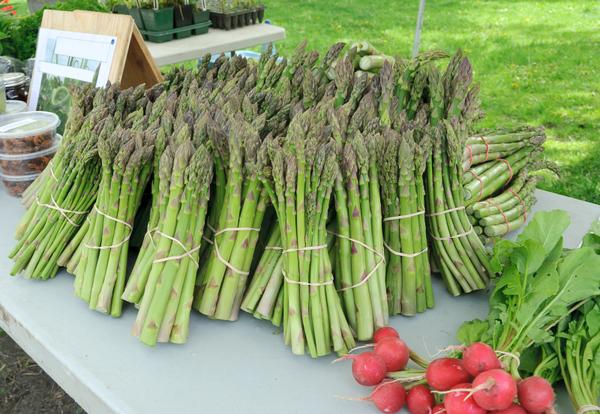
Asparagus for sale at an outdoor farmers market.
Photo by Alison Hancock/Bigstock.com
Preparing
-
Cut off the white end (the base) of the stalk before cooking or eating.
-
Slice fresh, raw asparagus and add to salads, soups, and stews.
-
Brush with olive oil, sprinkle lightly with salt and pepper, and cook on a grill or under a broiler for a delicious, low-fat treat.
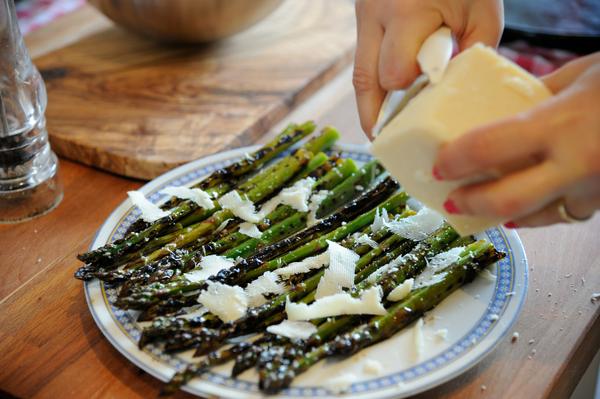
Grilled asparagus with cheese.
Photo by miziostock/Bigstock.com
Recipes
Asparagus Frittata
Preparation time: 20 minutes
Serves: 3
Ingredients:
-
24 asparagus spears, trimmed
-
1 ½ cups egg substitute
-
2 scallions, chopped
-
2 Tbsp. olive oil
-
⅓ cup Parmesan cheese, grated
-
1 tsp. dried mint
Directions
Slice asparagus into 1-inch diagonal slices. Heat oil in a 10-inch nonstick skillet and sauté asparagus and scallions for 5 minutes.
Blend egg substitute, cheese, and mint. Pour over asparagus and scallions in skillet and cook on medium heat, gently pulling sides of mixture from skillet to cook eggs throughout.
Cover skillet with lid once egg mixture is cooked halfway through. Use a spatula to divide it into thirds. Turn each piece once. Serve immediately.
Fiery Grilled Asparagus
Preparation time: 30 minutes
Servings: 4
Ingredients:
-
1 lb. asparagus
-
1 Tbsp. crushed red pepper flakes
-
2 Tbsp. olive oil
-
2 tsp. rice wine vinegar
-
1 Tbsp. toasted sesame seeds
-
1 tsp. sugar
-
Salt
-
Pepper
Directions
Coat a clean grill rack with nonstick cooking spray. Preheat grill to medium (300°F to 350°F).
Trim and discard tough ends of asparagus.
Combine asparagus, red pepper flakes, olive oil, vinegar, and sugar in a large, shallow dish. Add salt and pepper to taste. Marinate 15 minutes.
Grill 5 to 6 minutes, turning once. Arrange grilled asparagus on a platter and sprinkle with toasted sesame seeds.
Grilled Asparagus, Tomato, and Blue Cheese Salad
Preparation time: 20 minutes
Servings: 4
Ingredients:
-
1 lb. asparagus
-
1 cup grape tomatoes
-
2 Tbsp. extra virgin olive oil, divided in half
-
¼ cup crumbled blue cheese
-
¼ cup thinly sliced red onion
-
1 garlic clove, minced
-
1 Tbsp. balsamic vinegar
-
1 Tbsp. finely chopped fresh basil
-
Salt
-
Pepper
Directions
Preheat grill to medium (300°F to 350°F).
Thread asparagus onto two or three parallel skewers to hold them together during grilling. Thread tomatoes onto two skewers. Brush vegetables with 1 Tbsp. oil and season with salt and pepper to taste.
Place skewers on grill. Grill for 5 minutes, turning occasionally. Remove the skewers from the grill, and remove the vegetables from the skewers. Cut asparagus into 2-inch pieces.
In a medium bowl, toss asparagus, tomatoes, blue cheese, onion, and garlic.
Drizzle with vinegar and remaining 1 Tbsp. oil; toss.
Adjust seasoning to taste; sprinkle with basil and serve.
Pesto Chicken Pasta
Preparation time: 30 minutes
Servings: 6
Ingredients:
-
8 oz. uncooked whole wheat bow tie pasta
-
2 cups cut-up fresh or frozen asparagus
-
3 cups (12 oz.) cubed, cooked chicken
-
1 cup halved cherry tomatoes
-
⅓ cup chopped red onion
-
1 can (2.24 oz.) sliced ripe olives, drained
-
¾ cup prepared pesto sauce
-
3 Tbsp. freshly shredded or grated Romano cheese
Directions
Cook pasta according to package directions; rinse and drain.
Steam or microwave asparagus until tender crisp. Drain.
Combine cooked pasta and asparagus in a large bowl.
Stir in chicken, tomatoes, onion, and olives. Gently toss with pesto sauce.
Serve warm, garnished with cheese.
Refrigerate leftovers.
Recipes were adapted from information at Have a Plant®.
Top 10 Ways to Enjoy Asparagus
-
Cool and crisp. To use asparagus in salads or other cold dishes, first boil or steam, then plunge the cooked asparagus into cold or ice water immediately to stop the cooking process and help preserve the color and crispness.
-
Veggie fettuccine. Toss asparagus with red and yellow peppers for a colorful dish.
-
Finger food. Asparagus makes a great appetizer for tailgating.
-
Creamy soup. Use asparagus, leeks, onions, russet potatoes, low-sodium chicken broth, lemon juice, and low-fat sour cream to make a lower-sodium soup.
-
Raw. Rinse and dry asparagus and enjoy it as-is or with your favorite dip.
-
Shake and bake. Place fresh asparagus in a plastic ziplock bag, drizzle with olive oil, and add salt, pepper, and other seasonings. Shake until asparagus is coated. Remove from the bag and bake at 400°F until crisp.
-
Steamed. As a great snack or side dish, cook fresh or frozen asparagus with garlic and low-sodium seasoning over a small amount of boiling water for 3 to 8 minutes, depending on the thickness of the spears. You can also use a microwave.
-
Gourmet. Dress up your traditional steamed or boiled asparagus with a mustard vinaigrette dressing.
-
Cheese, crackers, and asparagus. Spread a soft cheese (for example, goat cheese or Brie) on whole wheat crackers and top with a crisp asparagus tip. Serve as an appetizer or an afternoon snack.
-
Grilled. Place asparagus spears on a grill sprayed with olive oil and preheated to medium-high heat. Cook for 5 to 8 minutes until tender, turning occasionally.
-
This section adapted from information at Have a Plant®.
|
Nutrient |
Amount |
|
|---|---|---|
|
Total Calories |
3 |
|
|
Total Fat |
0 g |
|
|
Saturated Fat |
0 g |
|
|
Trans Fat |
0 g |
|
|
Cholesterol |
0 mg |
|
|
Carbohydrates |
1 g |
|
|
Dietary Fiber |
0 g |
|
|
Total Sugars |
0 g |
|
|
Added Sugars included |
0 g |
|
|
Protein |
0 g |
|
| Minerals |
Calcium |
0 mg |
|
Potassium |
1 mg |
|
|
Sodium |
0 mg |
|
|
Iron |
2 mg |
|
| Vitamins |
Vitamin A |
1 mcg RAE |
|
Vitamin C |
1 mg |
|
|
Vitamin D |
0 mcg |
|
Sources
Growing Asparagus in a Home Garden
Have a Plant®. The Foundation for Produce website.
NC State Extension Gardening Portal
USDA SNAP-Ed Connection—Asparagus
Sources
Saunders, Douglas C. 2001. Growing Asparagus in a Home Garden. Horticulture Information Leaflet 8002. Raleigh, NC: NC State Extension.
Have a Plant—Fruit & Veggies for Better Health™. Accessed May 2015.
Acknowledgments
The author wishes to express appreciation to Linda G. Brandon, Chris Gunter, Rachel Herring, Debra Ireland, Issac Lewis, Jeannie Leonard, Chantel Lumpkin, Karen Neill, and NC State Extension Master GardenerSM volunteers for their assistance in preparing this publication.
Publication date: May 1, 2026
AG-808-01
N.C. Cooperative Extension prohibits discrimination and harassment regardless of age, color, disability, family and marital status, gender identity, national origin, political beliefs, race, religion, sex (including pregnancy), sexual orientation and veteran status.