
How to prune blackberry to maximize the health, longevity and yield of commercial and backyard plantings.
Pruning Calendar
| Activity | Timing | Fruiting Type | Objectives |
|---|---|---|---|
| Dormant pruning | Jan–Feb | FF/PF* | Open up canopy, establish fruiting zone, Integrated Pest Management (IPM) |
| Summer tipping | June–July | FF | Stimulate lateral branching |
| Post-harvest floricane removal | Aug–Oct | FF/PF | Sanitation |
*FF = Floricane fruiting; PF = Primocane fruiting ↲
Dormant Pruning Steps
- Remove dead, damaged, diseased, and galled canes.
- Select three to eight vigorous main canes per plant, removing weak canes or those growing horizontally or downward.
- Head back any untipped main canes to 6 to 12 inches above the top trellis wire or at 3.5 to 4 feet if there is no trellis.
- Remove any lateral branches below the bottom wire (less than 2-foot height), unless they are needed to fill in the trellis space.
- Shorten lateral branches to 12 to 18 inches in length.
- Secure canes and lateral branches to the trellis using wire tape, ties, or clips.
- Remove and discard cane cuttings from the planting.
(See Figure 1.)
For more information, view “Blackberry Pruning with Gina Fernandez, NC State Extension Small Fruits Specialist.”
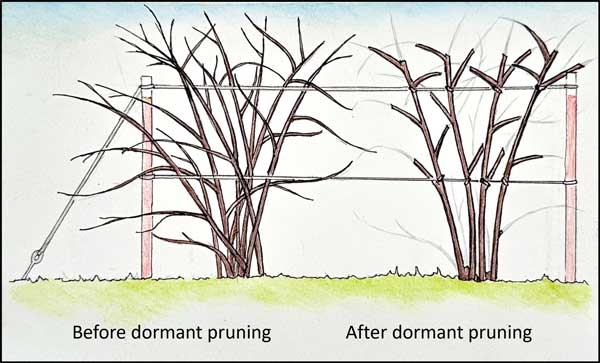
Figure 1. Blackberry plants before and after dormant pruning.
Image credit: Hannah Lepsch
Summer Tipping
Tipping primocanes in the summer promotes lateral branching (Figure 2). Once the primocanes reach the height of the top trellis wire, pinch terminal portions of shoots while they are tender enough to be removed with fingers (soft tipping). If canes are large or hardened enough that they must be cut with pruners (hard tipping), apply fungicide (FRAC 3) within 24 hours to reduce the risk of cane blight infection. Be sure to use fungicide that is labeled for use on blackberries, and read and follow the label instructions. Expect to make two to four tipping passes over the field during the growing season.

Figure 2. A tipped primocane with new lateral branch growth.
Photo credit: Hannah Lepsch
Additional Notes
- For first-year plantings, tie up canes during the first growing season to avoid soil contact and prevent herbicide damage. Tipping is not necessary on first-year tissue culture plants. To stimulate regrowth during dormancy, cut back any short canes (less than 3 feet long) to 3 inches from the base.
- Primocane-fruiting blackberries can be single- or double-cropped. For single-cropping systems, cut all canes to the ground in the late fall or winter, following primocane crop harvest, and remove from the field. For double-cropping, remove dead floricanes after harvest. While plants are dormant during the winter, prune out the tops of primocanes to just below the dead portion that produced in the previous year, shorten any long or crossing lateral branches, and tie canes to the trellis wire.
Publication date: Sept. 22, 2025
AG-990
N.C. Cooperative Extension prohibits discrimination and harassment regardless of age, color, disability, family and marital status, gender identity, national origin, political beliefs, race, religion, sex (including pregnancy), sexual orientation and veteran status.