
Introduction
Laurel wilt is a disease of plants in the laurel family (Lauraceae), primarily redbay and sassafras, caused by an invasive beetle and the fungus it carries. The redbay ambrosia beetle, native to Southeast Asia, carries the pathogenic fungal associate within its mouthparts. When the beetle bores into its host, the fungus enters the tree, causing disease. Following infection by the pathogen, host trees react by plugging their water-transporting tissues, which stops water flow and kills the tree within a few weeks to months. While laurel wilt affects redbay and sassafras most, it can impact avocado trees, making it an economic concern for growers. The redbay ambrosia beetle was first detected in 2002 in Georgia and has since spread across the Southeast. In 2011, the beetle and fungus complex were discovered in North Carolina, and has rapidly spread.
Causal Agents
The redbay ambrosia beetle, Xyleborus glabratus, carries the fungal pathogen, Harringtonia lauricola (previously Raffaelea lauricola) that causes laurel wilt The beetle carries the fungus in pocket-like structures on its mouthparts called mycangia. As the redbay ambrosia beetle attempts to bore into its hosts, the fungus infects the trees, leading to disease and ultimately death. A single inoculation can cause disease, causing host decline and thus making it more attractive for additional attacks.
Host Plants and Impact
Laurel wilt disease impacts plants in the laurel family (Lauraceae). Impacted species include upland redbay (Persea borbonia), swampbay (P. palustris), sassafras (Sassafras albidum), avocado (P. americana), pondberry (Lindera melissifolia), and pondspice (Litsea aestivalis). Redbay and sassafras are most commonly infested. In fact, redbay in the Southeast is now typically an understory plant with a diameter of under four inches (Olatinwo et al. 2021). Sassafras is less common in southeastern forests, but impacts of laurel wilt are similar in places where it is locally common. Pondberry and pondspice are of particular interest due to their conservation statuses (endangered and threatened, respectively). Further, the impact on avocado is an economic concern for growers in Florida, where the commodity is valued at $12 million per year. Laurel wilt has not been found in California, but an introduction there would cause great concern for the avocado industry there, which is valued at $455 million. While the beetle prefers other hosts to avocado, it is still attacked, and the effect of laurel wilt on avocado varies by cultivar. Moreover, additional ambrosia beetle species that attack avocado have also been found to carry the deadly pathogen.
Laurel wilt has cascading impacts as herbivores which rely on laurel species decline. For example, the Palamedes swallowtail butterfly (Papilio palamedes) requires redbay trees to feed and reproduce (Fig. 1). When comparing forests with and without laurel wilt in North Carolina and Mississippi, one study found a significantly greater abundance of the Palamedes swallowtail in those areas without the disease. Additionally, this study catalogued 178 native arthropod species that feed on laurel wilt-susceptible plants, with 28 of these species having a high to moderate risk of endangerment because of laurel wilt (Riggins et al. 2019).
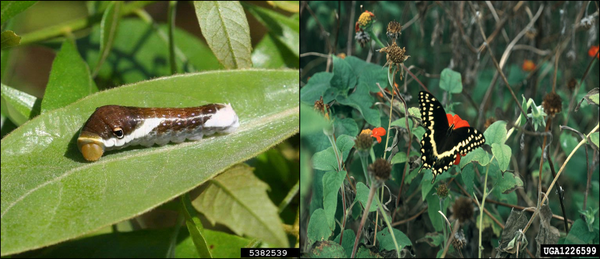
Figure 1. The Palamedes swallowtail butterfly is an obligate specialist on redbay trees, making laurel wilt a concern for the conservation of this species.
Johnny N. Dell, Bugwood.org (left); Jerry A. Payne, USDA Agricultural Research Service, Bugwood.org (right)
Life Cycle and Damage
Most ambrosia beetles only attack dead or dying trees, but the redbay ambrosia beetle attacks even healthy trees. While this initial attack is typically unsuccessful for the beetle, it results in the fungal pathogen being introduced into the host tree. After this inoculation, the fungus moves in the water-conducting tissues (xylem) of the host. In response, the tree “plugs” its conductive tissues to prevent movement of the fungus. However, this reaction ultimately kills the tree as it stops the movement of water but not the movement of the pathogen. As the tree declines, the redbay ambrosia beetle attack in larger numbers, forming galleries within the xylem, feeding on colonies of the fungus it introduced, and depositing eggs to produce more beetles. Due to the reproductive habits of the beetle, it only takes a single female beetle to start an infestation. Unmated female beetles can lay eggs which will develop into males. Then, the females mate with their progeny to produce more females. Often, adult females emerge from host trees having already mated with progeny or siblings, allowing them to quickly start an infestation on a new host. While H. lauricola is mostly transported by the redbay ambrosia beetle, the pathogen can spread between trees through root grafts as well. When two trees grow close together, their roots can sometimes touch and naturally fuse over time, called a root graft. Through these connections, trees can share water, nutrients, and even disease pathogens. Additionally, transfer of the pathogen from the redbay ambrosia beetle to other ambrosia beetle species has been observed, showing that more beetles than just redbay ambrosia beetle can vector the pathogen that causes laurel wilt (Carrillo et al. 2013).
Signs and Symptoms
Symptoms of laurel wilt are similar to drought stress symptoms. Leaves begin to wilt and change color, turning olive green, reddish, or brown (Fig. 2). In deciduous trees (trees that lose their leaves each winter, such as sassafras), the leaves will fall off prematurely. On evergreen trees (such as redbay), the dead leaves often stay on the branches for months or, in some cases, over a year. Additionally, branches wilt and die back.
There may also be evidence of redbay ambrosia beetle activity or the fungus itself. These include small stacks of horizontal sawdust, which look like toothpicks being pushed out of the host trees (Fig. 3). Entrance holes from beetles may be spotted on or beneath the bark, but they are very small and difficult to detect (the beetle is about 2 mm long, which is roughly the size of Lincoln’s nose on the U.S. penny). Beneath the bark, there is discoloration or streaking within the sapwood from the fungus (Fig. 4). Typically, the discoloration runs with the grain and starts as streaks before expanding within the tissues. To confirm disease, streaked area of sapwood can be removed and submitted to a diagnostic clinic.
Laurel wilt is being actively monitored as it spreads. If you detect any signs or symptoms of laurel wilt in an area unknown to be infected, please report them to NC State Extension or the NC Forest Service.
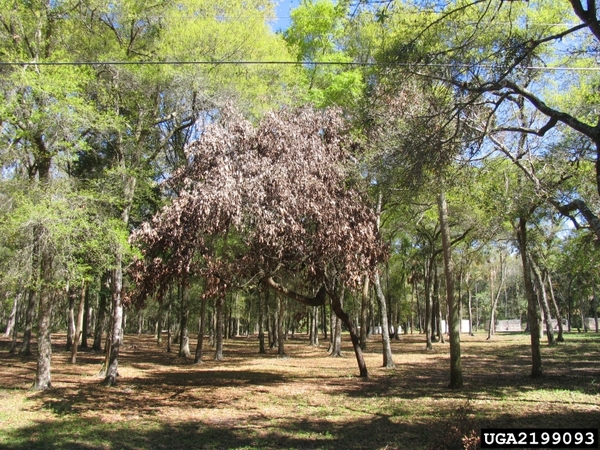
Figure 2. The symptoms of laurel wilt are drought-like, including wilting and discolored leaves.
Albert (Bud) Mayfield, USDA Forest Service, Bugwood.org
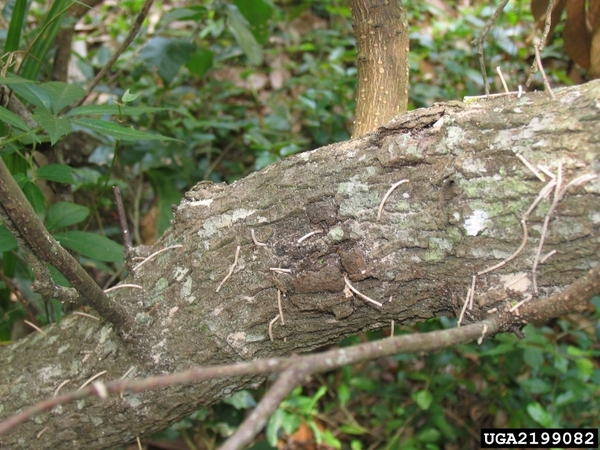
Figure 3. Frass toothpicks are a sign of infestation by the redbay ambrosia beetle, but they are not exclusive to this pest.
Albert (Bud) Mayfield, USDA Forest Service, Bugwood.org
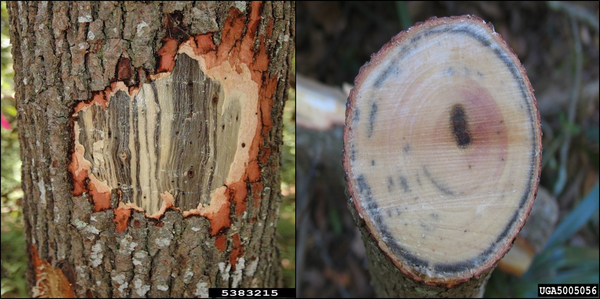
Figure 4. Discoloration and streaking within the sapwood of host trees is a common sign of laurel wilt disease.
Ronald F. Billings, Texas A&M Forest Service, Bugwood.org (left); Albert (Bud) Mayfield, USDA Forest Service, Bugwood.org (right)
Management
Unfortunately, management options for laurel wilt are extremely limited. It is important to prevent the movement of infested plants to areas where the disease does not occur to limit spread. Infested trees can be chipped for a better chance of killing the redbay ambrosia beetle, but the beetle’s small size may limit effectiveness of this tactic. Contact insecticides are ineffective once the beetle bores into the tree, and systemic insecticides are likewise ineffective as the beetle mostly feeds on its fungal symbiont rather than wood (Kendra et al. 2013, Olatinwo et al. 2021). For high value individual trees like avocado, fungicidal treatments (e.g., propiconazole) may be effective for about a year (Mayfield et al. 2019). Research on effective management is ongoing.
References
Blaedow, R., Heath, B., Langston, W., Lawing, C., Moan, J., Trickel, R. & Oten, K. (2013). Forest Health Handbook (3rd ed.). North Carolina Forest Service.
Carrillo, D., Duncan, R.E., Ploetz, J.N., Campbell, A.F., Ploetz, R.C. & Peña, J.E. (2014), Lateral transfer of a phytopathogenic symbiont among native and exotic ambrosia beetles. Plant Pathology, 63, 54-62. doi: 10.1111/ppa.12073.
Kendra, P., Montgomery, W., Niogret, J. & Epsky, N. (2013) An uncertain future for American Lauraceae: A lethal threat from redbay ambrosia beetle and laurel wilt disease (a review). American Journal of Plant Sciences, 4, 727-738. doi: 10.4236/ajps.2013.43A092.
Mayfield, A.E., Fraedrich, S.W. & Merten, P. (2019). Laurel wilt. Pest Alert R8-PR-01-19. U.S. Department of Agriculture, State and Private Forestry, Southern Region. 2 p.
Olatinwo, R.O., Fraedrich, S.W. & Mayfield, A.E., III. (2021). Laurel wilt: Current and potential impacts and possibilities for prevention and management. Forests, 12, 181. doi: 10.3390/f12020181.
Riggins, J.J., Chupp, A.D., Formby, J.P., Dearing, N.A., Bares, H.M., Brown, R.L. & Oten, K.F. (2019). Impacts of laurel wilt disease on arthropod herbivores of North American Lauraceae. Biological Invasions, 21, 493–503. doi: 10.1007/s10530-018-1838-5.
Publication date: July 29, 2025
N.C. Cooperative Extension prohibits discrimination and harassment regardless of age, color, disability, family and marital status, gender identity, national origin, political beliefs, race, religion, sex (including pregnancy), sexual orientation and veteran status.