Notify me when new publications are added.

This publication describes the invasive Callery pear species, its offspring, and how it can harm native ecosystems. It details how to identify these invasive trees and distinguish them from other trees with similar physical characteristics. It also includes information about what landowners should do if they have Callery pears on their property.
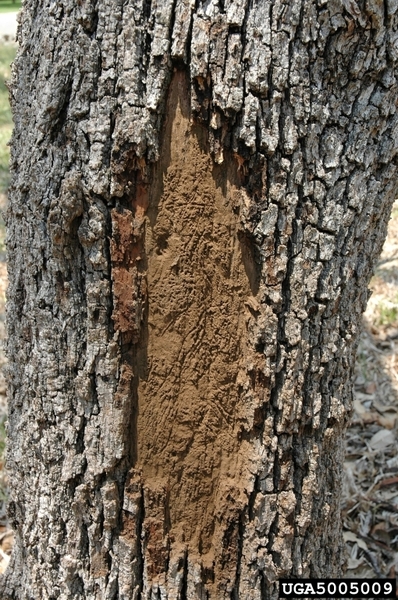
Biscogniauxia canker, formerly known as Hypoxylon canker, is a fungal disease which impacts hardwood trees throughout the southern United States. The causal pathogen lives within many hardwood trees, but the hosts do not succumb unless they are stressed by some other factor, such as drought, injury, or poor site conditions. Biscogniauxia, the genus of the fungal pathogen, becomes problematic when it invades the sapwood of its hosts following stress, leading to disease symptoms and tree death. Although this disease was formerly called Hypoxylon canker, it should not be confused with Hypoxylon canker of aspens, which is caused by a separate fungal pathogen.
Laurel wilt is a disease of plants in the laurel family (Lauraceae), primarily redbay and sassafras, caused by an invasive beetle and the fungus it carries. The redbay ambrosia beetle, native to Southeast Asia, carries the pathogenic fungal associate within its mouthparts. When the beetle bores into its host, the fungus enters the tree, causing disease. Following infection by the pathogen, host trees react by plugging their water-transporting tissues, which stops water flow and kills the tree within a few weeks to months. While laurel wilt affects redbay and sassafras most, it can impact avocado trees, making it an economic concern for growers. The redbay ambrosia beetle was first detected in 2002 in Georgia and has since spread across the Southeast. In 2011, the beetle and fungus complex were discovered in North Carolina, and has rapidly spread.