Notify me when new publications are added.

This publication discusses the results of field testing of an image-based application designed to estimate blueberry yield and maturity from field images. Testing was conducted through the N.C. Plant Sciences Initiative Extension Agent Network and included a wide variety of commercial blueberry farms.

This publication discusses a study conducted to provide clarity about when a response to starter fertilizer might occur in North Carolina.
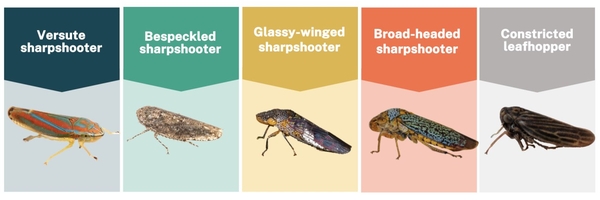
In collaboration with NC Cooperative Extension horticulture county agents, we conducted a monitoring program to assess abundance of potential Xylella fastidiosa (Xf) insect vectors over the growing season of 2025, using yellow sticky traps. Xf is the causal agent of Grapevine Pierce’s Disease. The aim of this study was to evaluate the occurrence and species composition of Xf insect vectors in NC wine growing regions. Yellow sticky traps were placed in ten vineyards in three growing regions, and replaced every 2-3 weeks, from April through August of 2025. Four vineyards were monitored in the Yadkin Valley AVA, four vineyards in the NC Eastern Piedmont region, and two vineyards in the Crest of the Blue Ridge AVA. Xf insect vector composition did not change compared to earlier studies. Across all monitored regions, the Versute Sharpshooter was by far the most abundant vector. But Xf insect vectors in Yadkin Valley and Piedmont were observed in two peaks, one in April-May, and one later in the season. These findings might have implications on timing of pest management interventions in NC vineyards. However, we only present data from one year, and this study will be continued in 2026 and 2027 to validate our results.
